Hail Damage Commercial Roof Repair
Bruised membrane, split seams, and dented panels often hide after a spring storm. A full roof walk marks each hit, and we patch or replace the areas that let water reach the insulation below.
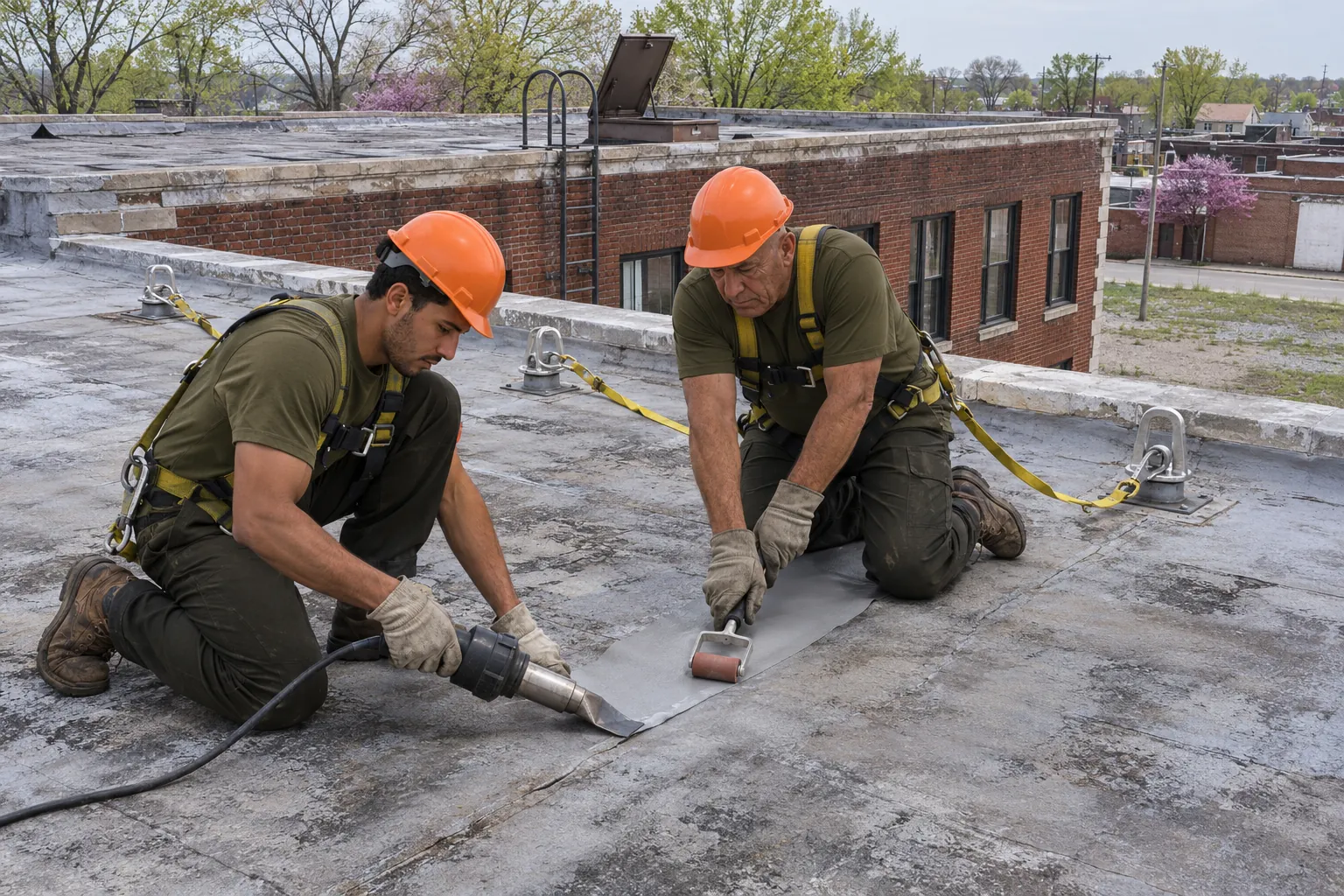
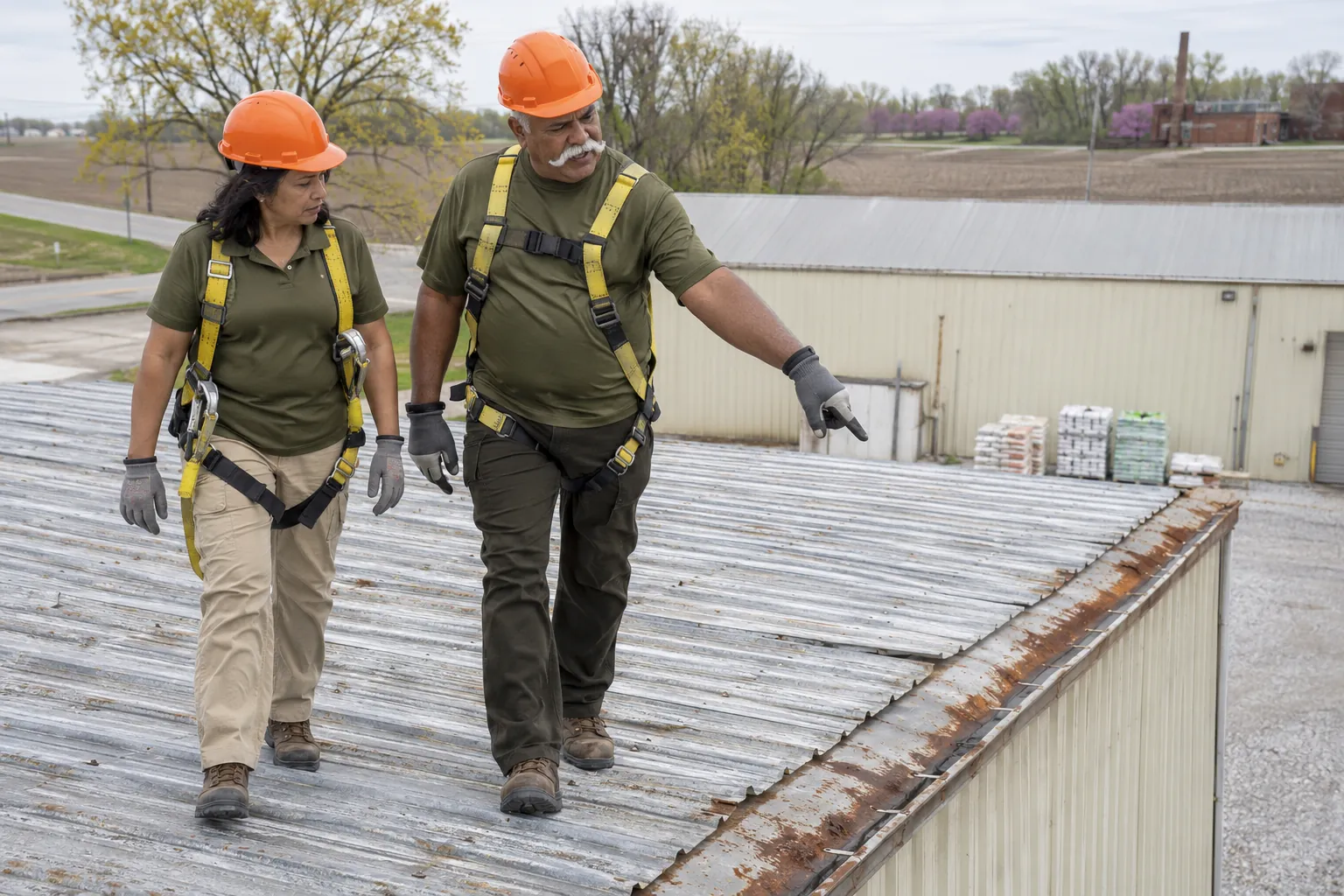
As an Anderson commercial roof repair contractor, we trace leaks to the roof detail causing them and repair flat, metal, and industrial roofs on working buildings.
Most Anderson commercial roof repair calls begin with one of these six conditions, and each one ties back to a roof detail we can find and fix.
Bruised membrane, split seams, and dented panels often hide after a spring storm. A full roof walk marks each hit, and we patch or replace the areas that let water reach the insulation below.
Membrane laps open as the roof moves through hot afternoons and freezing nights. Water slips under the edge, travels along the insulation, and drips somewhere far from the seam that let it in.
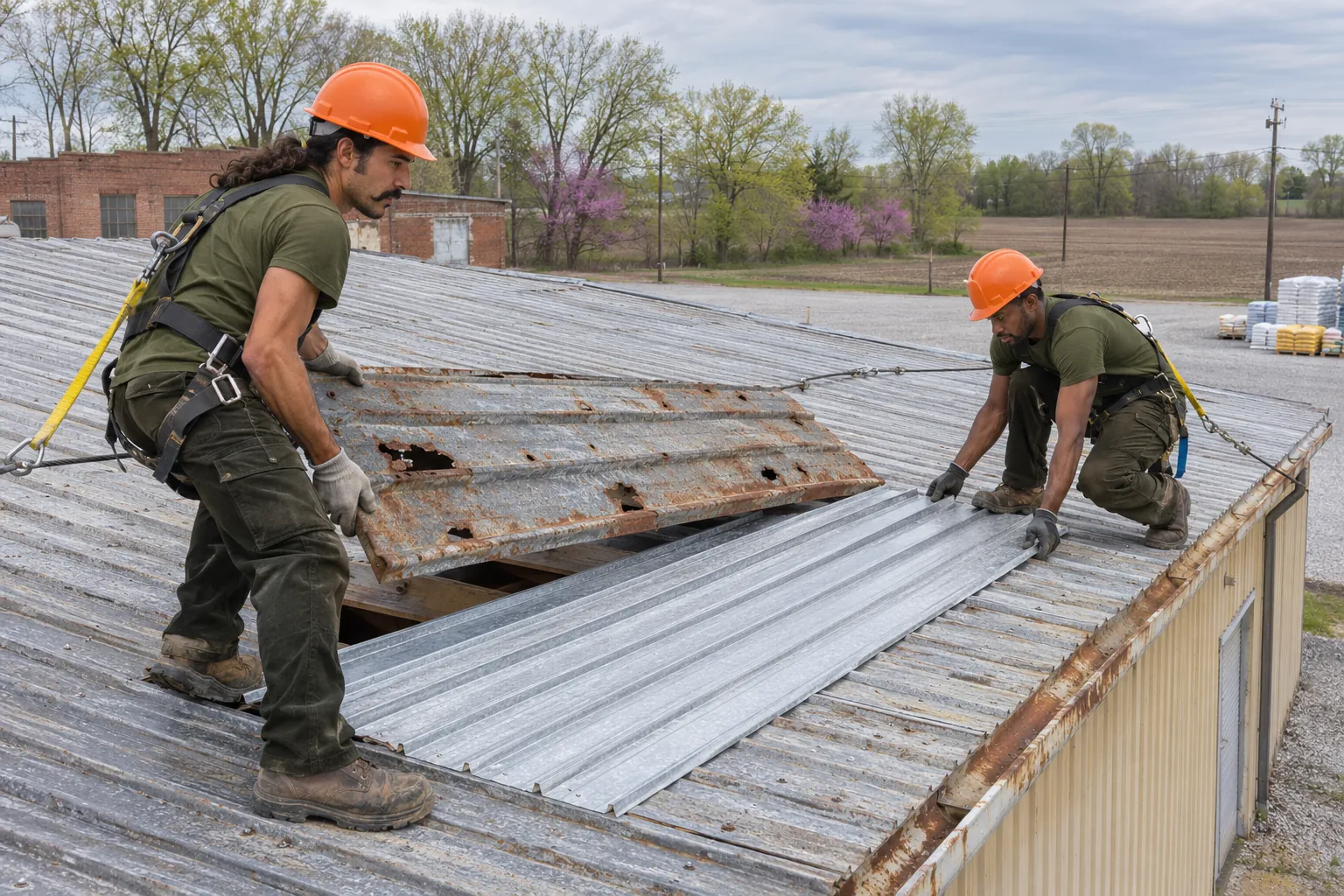
Screws on metal roofs work loose as panels expand and shrink, and their rubber washers crack with age. Each loose screw becomes a leak point that widens through every freeze-thaw cycle.
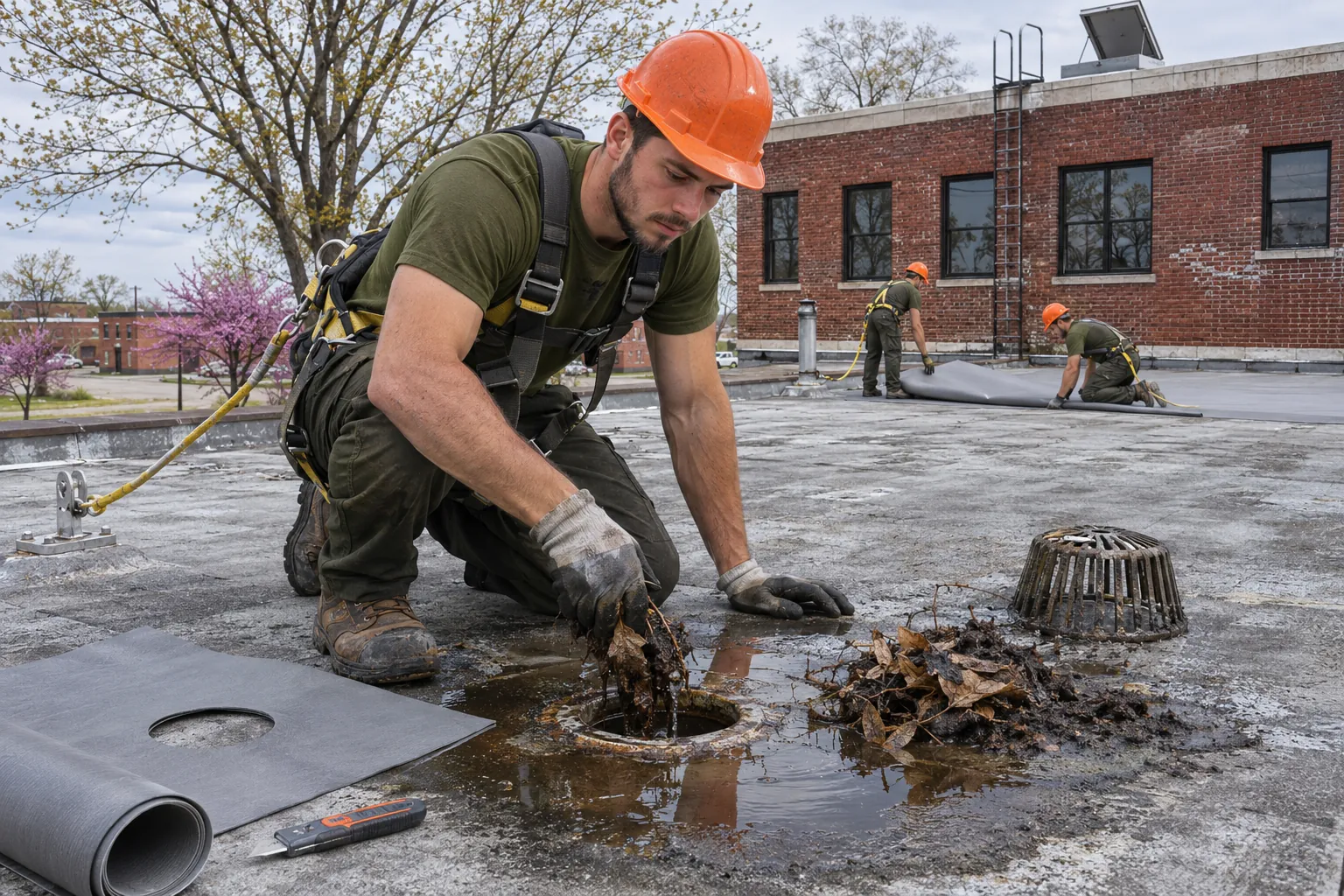
Leaves and grit block roof drains and scuppers, so rain sits for days instead of draining. Standing water adds weight, softens the membrane, and finds any weak seam within a few feet of the drain.
Base flashing at parapets and walls shrinks, cracks, or pulls loose from the masonry. Water then runs behind the membrane and shows up inside along an exterior wall, sometimes well below the roof line.
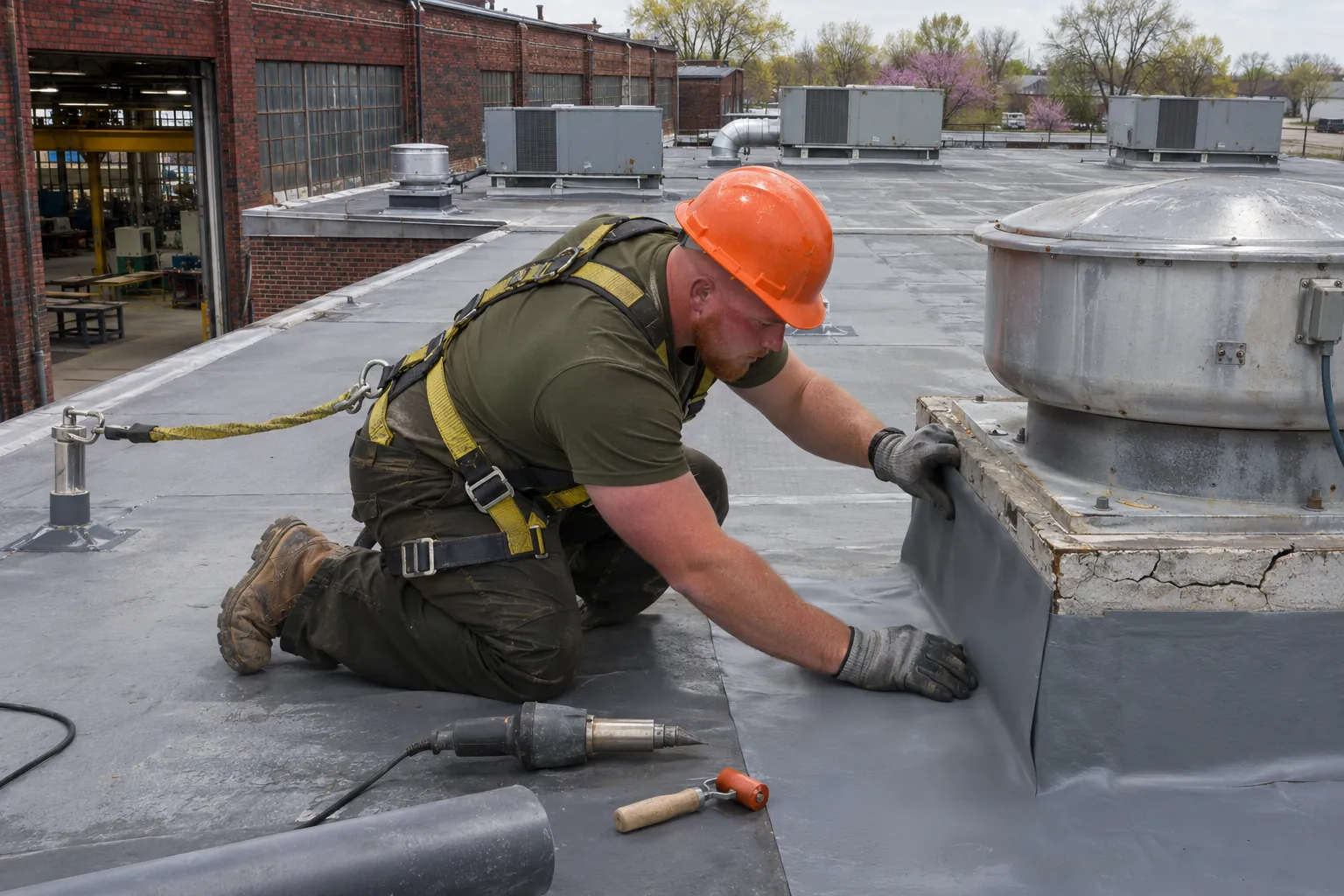
HVAC curbs, exhaust fans, and pipe penetrations each break the roof surface. Cracked curb flashing, dried sealant, and grease from kitchen or process fans cause many drips over offices and production floors.
Four repair services cover the roofs on Anderson plants, warehouses, shops, and offices. Each card lists the usual fixes and the point where a new roof makes more sense.
Membrane roofs on plants, warehouses, and strip centers, where blisters, opened laps, and ponding near drains let water reach the insulation below.
Common FixesWet insulation across large areas points to a new roof.
Screw-down and standing-seam roofs on shops, pole buildings, and warehouses, where loose fasteners, rusted laps, and bent flashing open small leaks.
Common FixesRust through most panels means replacement beats patching.
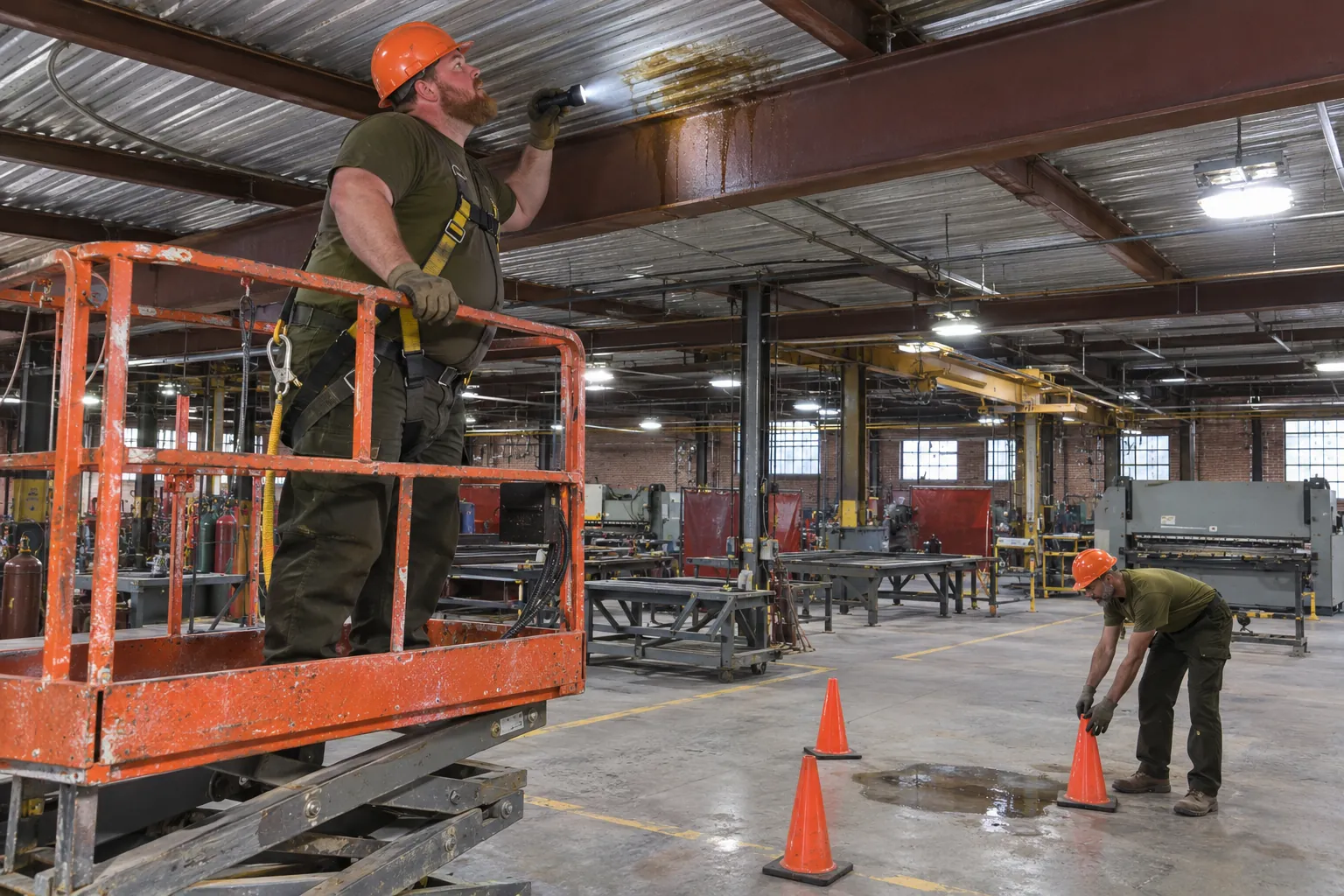
Drips and ceiling stains with no obvious cause, traced from inside the building back to the seam, curb, or wall flashing letting water in.
Common FixesLeaks in every section and every rain mean replacement.
Plant roofs crowded with exhaust fans, process vents, and pipe supports, repaired in phases so production under the deck keeps running.
Common FixesSoaked decks under process areas need a section replaced.
Call and tell us where the water shows. We will talk through what to protect inside and set a time to trace the leak on the roof.
Every repair follows the same work order, from the first roof walk to the notes you keep for the next storm season.
We start at the spot you report, then walk every section, drain, and curb. Problems rarely travel alone, so we also mark nearby seams and flashing that are close to failing.
Inside, we note stains, drips, and wet ceiling tile. Up top, a moisture meter and, where needed, a small core cut show how far water has moved through the insulation.
You get a written scope listing each repair area, the materials matched to your roof system, and anything worth watching. Work starts once you approve it.
Failed membrane, flashing, or panels are cut out, the area is dried, and new material matching the existing roof goes in. Ladders and staging stay clear of docks, doors, and parking.
Before-and-after photos of each repair area go to the owner or facility manager, with notes on spots to recheck after the next heavy rain or thaw.
A repair makes sense when the damage is limited and the layers below are dry. These are the checks that decide it on the roof walk.
| What We Check | Repair Usually Fits | Replacement Usually Fits |
|---|---|---|
| Leak locations | One or a few areas you can point to | Leaks across many sections in every rain |
| Insulation moisture | Dry readings outside small wet spots | Wet readings across large areas of the deck |
| Membrane or panels | Flexible membrane, panels with surface rust | Brittle, shrinking membrane or rusted-through panels |
| Repair history | A few past patches that are still holding | Patch on patch, with leaks returning |
| Drainage | Drains clear and the slope still moves water | A sagged deck holding water for days |
Fixing a small leak early protects more than the roof, especially on buildings that keep running while the work happens.
A small leak caught early keeps water out of the insulation and deck. Once insulation soaks through, a ten-foot patch can turn into a whole section that has to come off, so the smallest repair is usually the first one.
Repairs happen from the roof, so production lines, docks, and offices below keep running while seams and flashing are fixed.
Sealing curbs and drains before winter means fewer wet ceiling tiles, buckets, and stained stock in the spring.
Photos and repair notes give owners a history of the roof, which helps when budgeting for a future replacement.
We repair commercial roofs in Anderson, Elwood, Pendleton, Hartford City, Alexandria, and Fortville.
Outside these towns? Call us or send us a message.
Short answers on cost, storms, and permits. The full list is on the FAQ page.
Price follows the roof, so it is set after we walk it. The roof system, the number and size of problem areas, wet insulation, roof height, and work scheduled around operations all move the number.
Yes, when the rest of the roof is dry and holding. We repair the damaged section with matching material and mark any nearby seams or flashing worth watching.
After a hailstorm we walk every section, photograph each bruise, split seam, or dented panel, and repair the spots that let water in. Shallow dents on metal are usually cosmetic and get noted for the record.
Active water over people, power, equipment, or stock. Move what you can, shut off power near the drip, keep staff off a wet or icy roof, and call us to set up a temporary repair until the permanent one.
Small repairs often go ahead without one, while re-roofing and structural work can need a permit. Check with the City of Anderson's Municipal Development department, which runs the Permit Center, before larger work starts.
Indiana commercial buildings fall under the Indiana Building Code, adopted by the Fire Prevention and Building Safety Commission in 675 IAC 13. The local permit office applies it to larger roof work.
Tell us where the water shows and what the roof is made of. We will walk it, find the source, and write up the repair.