Old Roof Patches in Alexandria
Patches in mismatched materials lift at the edges and hold water under them. Testing shows which to keep. Asphalt mastic on single-ply membrane is one of the most common mismatches.
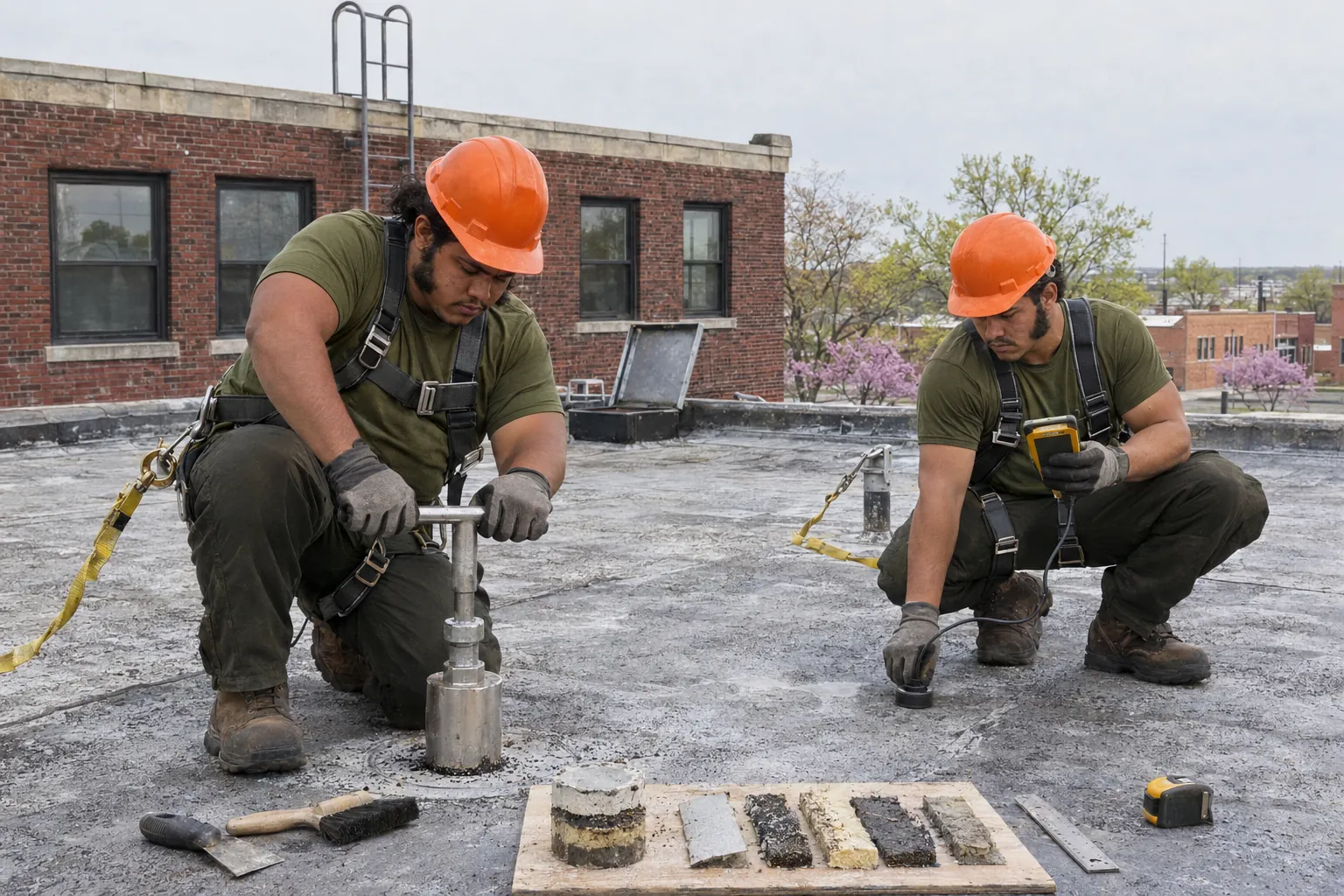
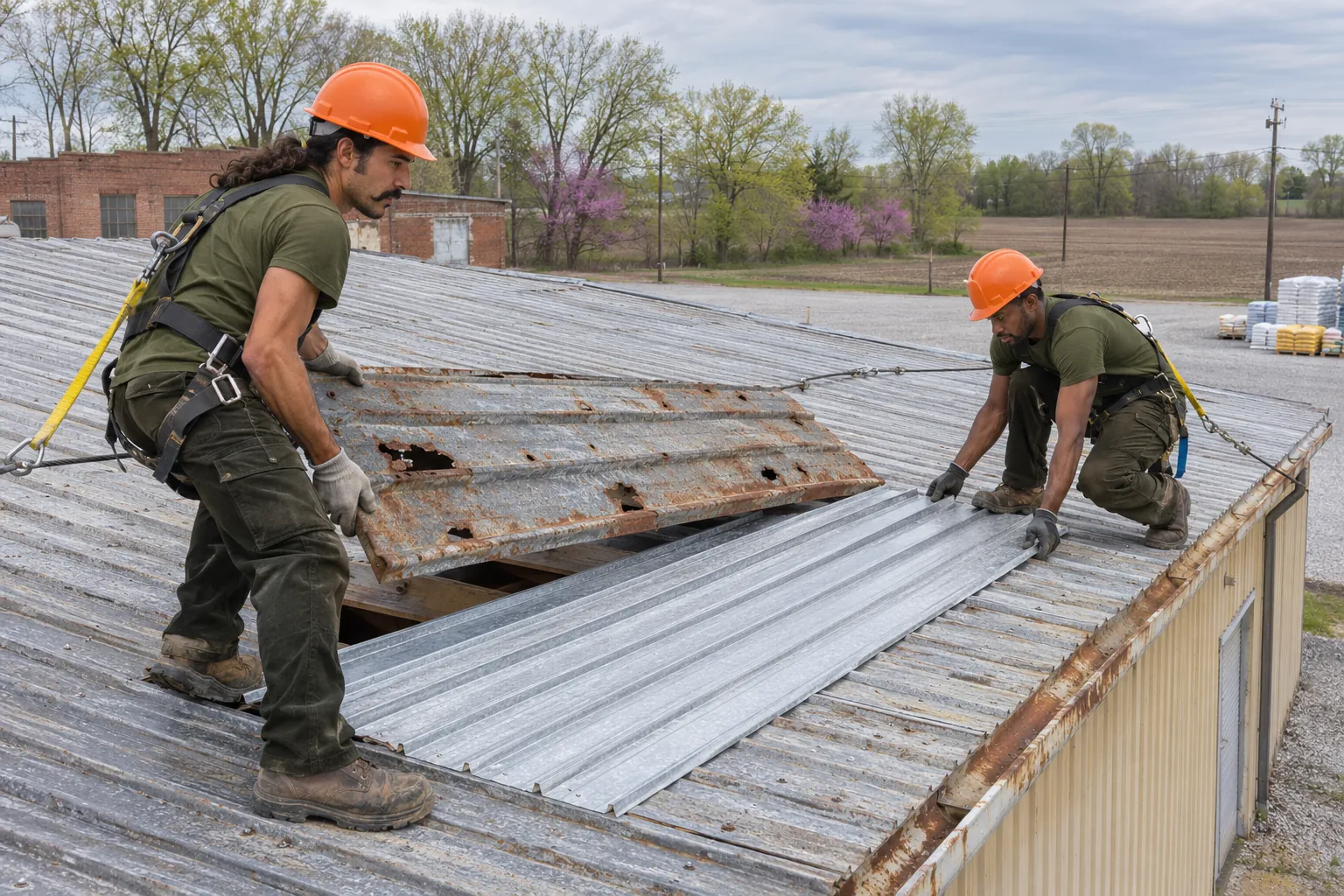
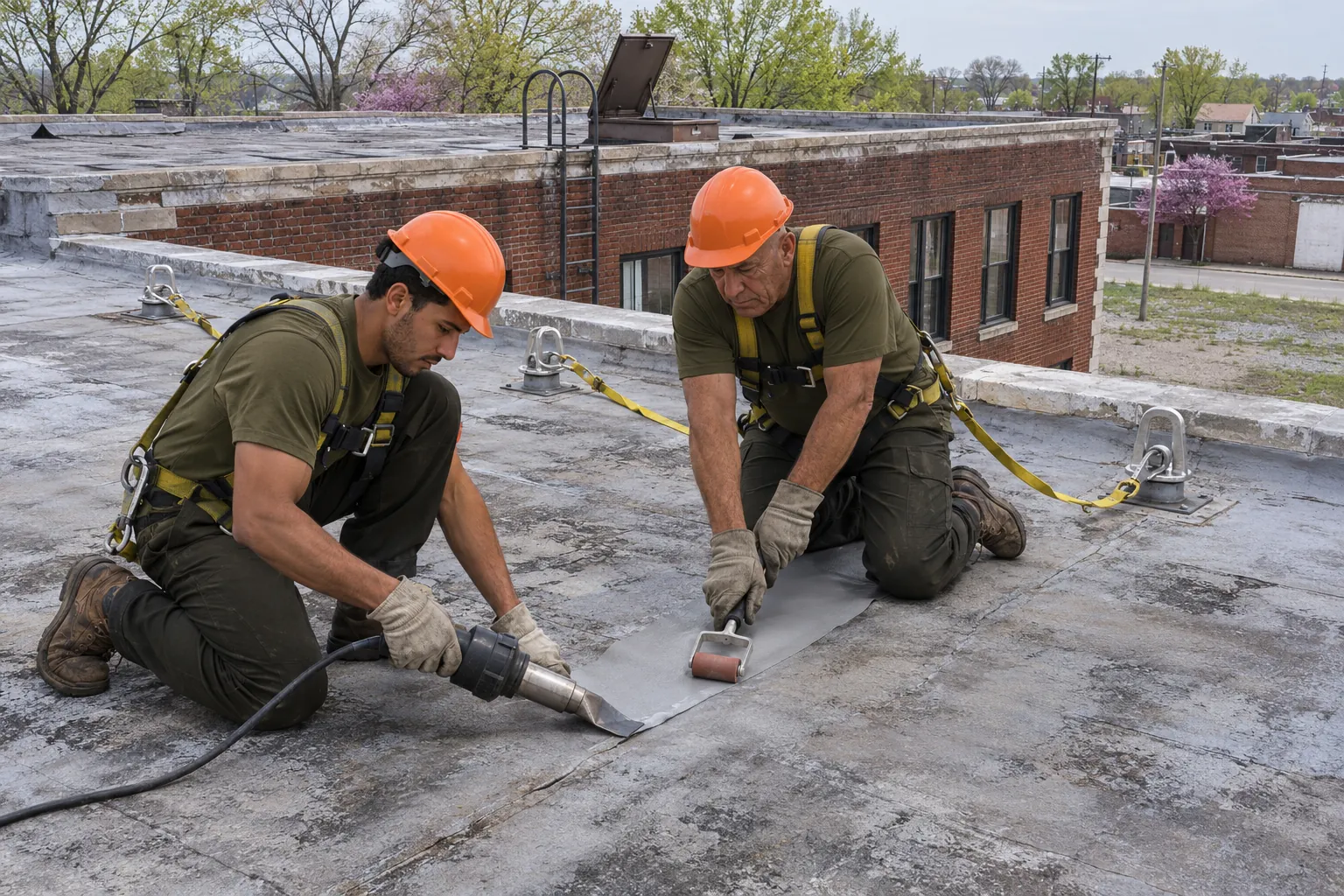
As an Alexandria commercial roof repair contractor, we test the old patches on your roof, cut out the failing ones, and bond new repairs to material that holds.
Alexandria commercial roof repair often starts with years of earlier fixes already on the roof.
Many older commercial roofs carry patches from different crews, in different materials, over different years. Some still hold. Others have let go at the edges and trap water underneath, so new material laid over them fails with them.
Each patch gets a pull test and a moisture reading. The ones still bonded stay. The rest come off so the new repair sits on clean, dry roof.
Layered repairs and central Indiana weather bring these six conditions.
Patches in mismatched materials lift at the edges and hold water under them. Testing shows which to keep. Asphalt mastic on single-ply membrane is one of the most common mismatches.
A small pull test at each patch edge shows whether it is still bonded. Loose ones come off before new work. Each result gets marked on the patch map so the next repair starts informed.
Flat roofs open at laps and lift into blisters as trapped moisture expands in summer heat. Cracked or growing blisters get cut out, dried, and patched with matching membrane.
Metal roofs leak where fasteners back out and side laps rust from the edges in. New oversized screws and sealed laps stop the spread.
Base flashing at walls shrinks and pulls away, sending water behind the membrane. A new flashing strip sealed to the masonry closes the gap.
Blocked drains hold water on the roof, where freeze-thaw and snowmelt make every weak spot worse. Clearing strainers each fall keeps that water moving before freeze-thaw season.
Testing shows whether old patches can stay or the area around them needs a new section.
| What We Check | Keep And Repair | Replace The Section |
|---|---|---|
| Patch edges | Bonded tight in a pull test | Lifting along most edges |
| Under the patch | Dry readings | Wet insulation spreading out |
| Patch count | A few scattered repairs | Patches covering much of an area |
| Materials | Compatible with the roof | Mismatched layers stacked up |
Testing old work first keeps new repairs from failing with it.
New membrane or sealant only holds as well as what is under it. Removing loose patches and drying the area gives each repair a clean surface to grip.
A patch map shows what was done where, for the next repair or replacement. It travels with the building if it changes hands.
Readings under old patches find wet spots before they spread. Those areas get cut out and replaced with dry insulation.
Knowing which patches are failing helps budget the next step. Owners can phase the work section by section over a few seasons.
Call and tell us about the past repairs. Testing them first shows which ones are letting water through.
Patch-heavy roofs get a testing step before any repair.
Each earlier patch is located, photographed, and marked on a roof sketch with its material and size. Patches hidden under ballast or debris get uncovered for the count.
A small pull test at each edge shows whether the patch is still bonded or lifting.
The scope lists patches that stay, patches that come off, and the new repairs that follow.
Failed patches come off, wet material is replaced, and new repairs bond to clean, dry roof. Seams in the new work get probed before the job closes.
Photos and an updated sketch go to the owner as the record for future work.
Three findings from patch testing decide most Alexandria repairs.
A patch that resists a firm pull at the edge is still working. One that peels back easily is holding water under it.
Moisture readings beside and under each patch show whether a past repair sealed the leak or only covered it.
Asphalt mastic on a single-ply roof, or rubber patches on a metal roof, rarely stay bonded and usually come off.
Past Alexandria, we repair commercial roofs in Anderson and four more towns.
Roof outside these towns? Call us or send us a message.
Old patches, common problems, and what testing shows.
Only over patches that pass a pull test and sit on dry roof. Lifting or wet ones come off first.
Each loose layer traps water and gives the next one nothing solid to grip. Removing them breaks the cycle.
On flat roofs, opened laps and blisters; on metal roofs, backed-out screws and rusted side laps. Wall flashing and blocked drains round out the list.
Yes. Freeze-thaw widens openings and snowmelt backs water into them, so early repairs keep water out of the insulation.
A roof sketch marking each repair, its material, and its date, so the next roofer knows what is up there.
It shows how much of the roof has been repaired and where problems cluster, which helps when budgeting a new roof.
A firm pull at the patch edge, by hand or with a small tool, shows whether it lifts. Lifting edges mean the bond has failed.
No lasting damage. Any spot opened for a reading or core gets patched before we leave.
Tell us about the leak and the past repairs. We will test the old patches and write up the work.