Flat Roof Blister Repair
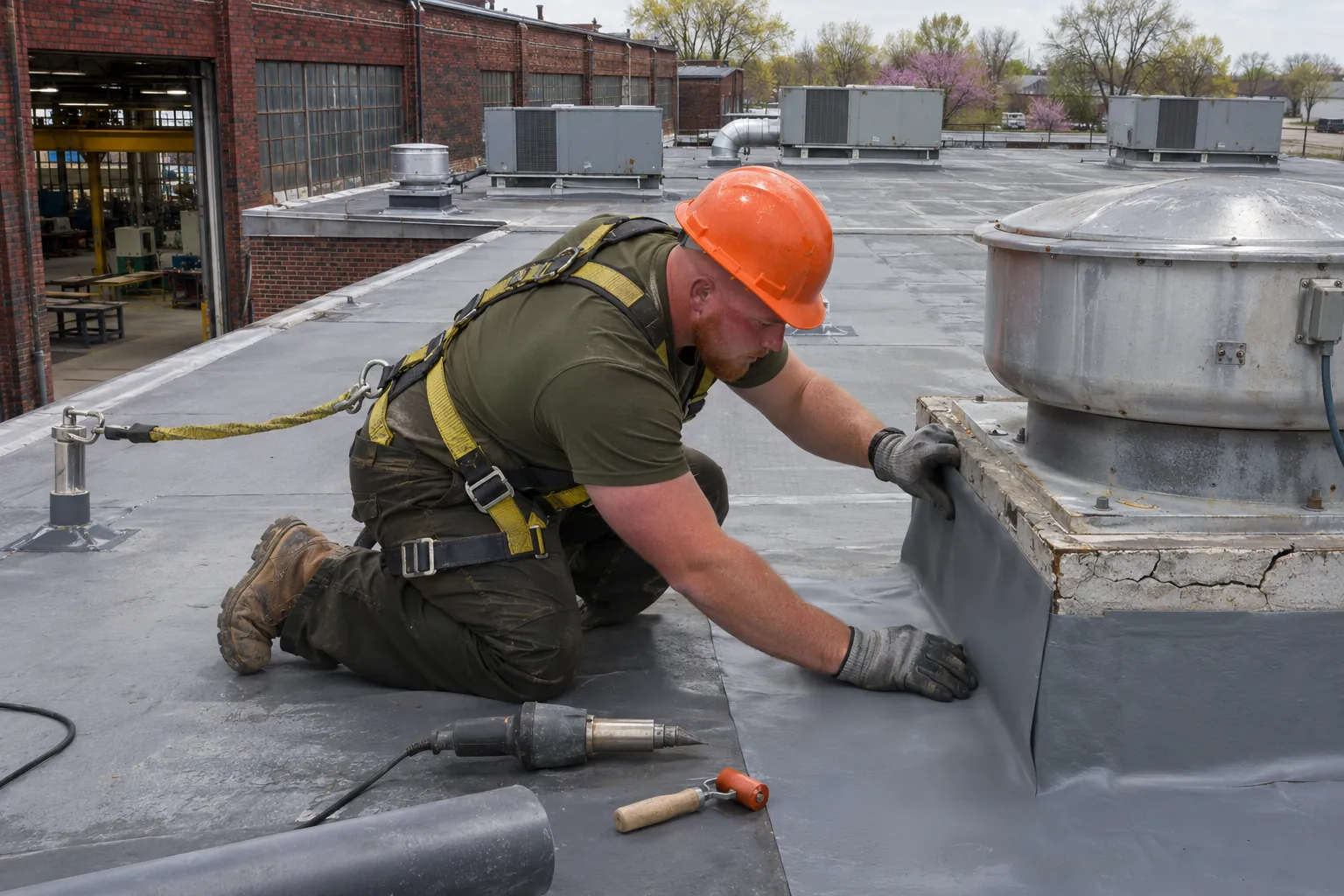
Trapped moisture or air expands in summer heat and lifts the membrane. Cracked or growing blisters get cut open, dried, and patched, and we check the insulation underneath for water.
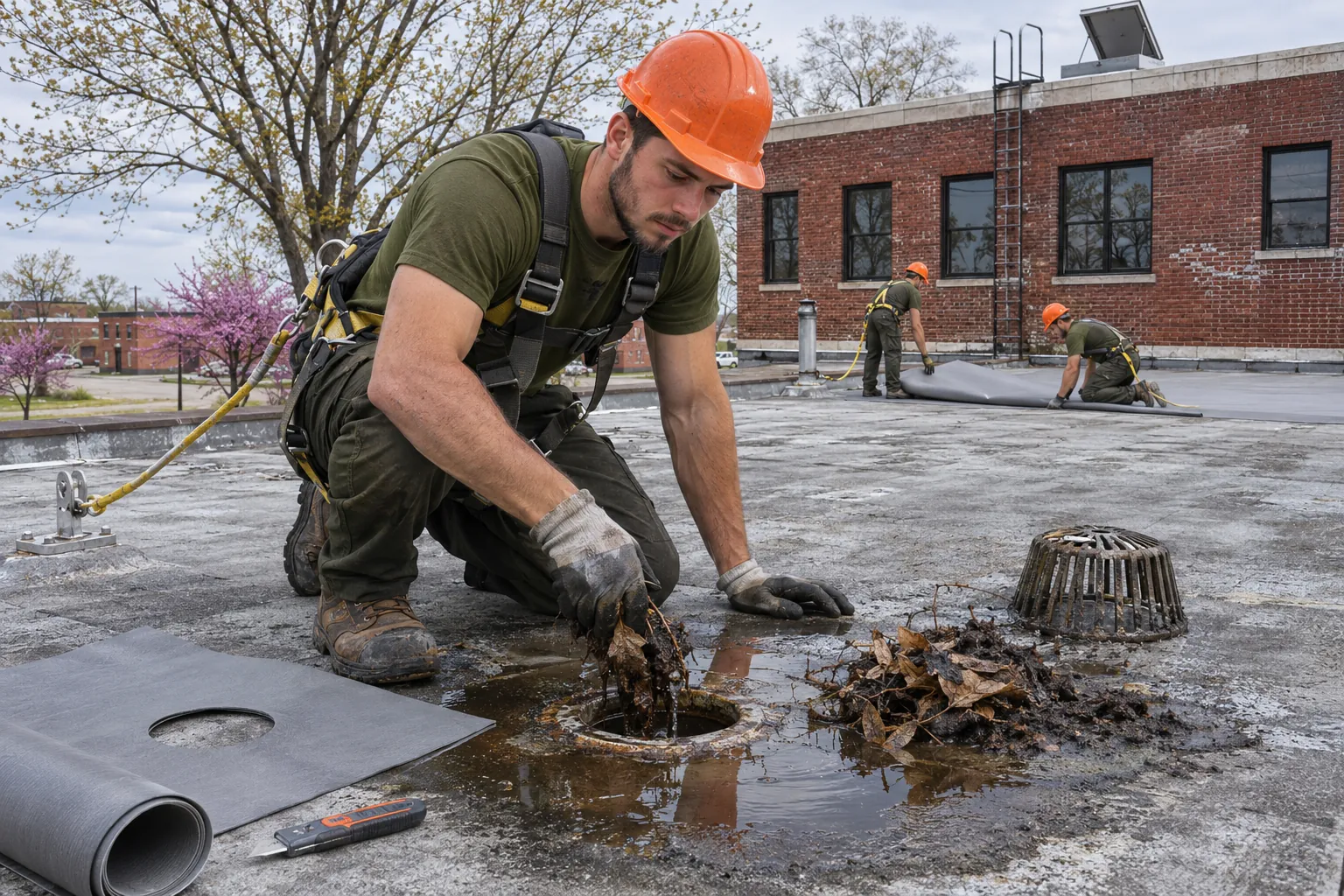
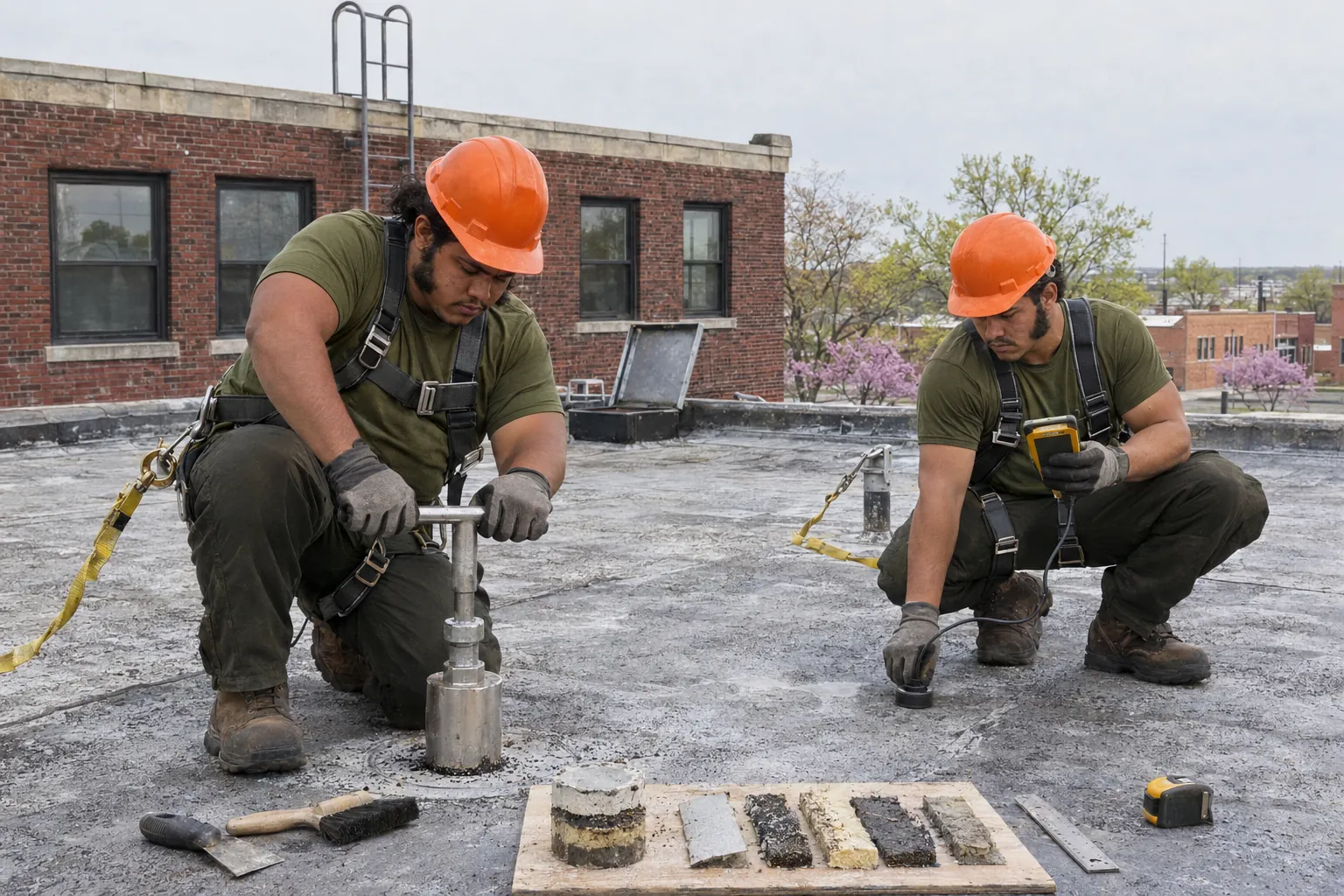
As an Anderson flat roof repair contractor, we fix blisters, open laps, and ponding on low-slope membrane roofs before water spreads through the insulation.
Anderson flat roof repair fits when problems sit in a few areas and the insulation is mostly dry. The roof walk sorts that out.
| What We Check | Good Fit For Repair | Plan For More Work |
|---|---|---|
| Blisters | A few dry or small wet blisters | Blisters across most of the field |
| Seams | Short runs of opened laps | Seams failing along every sheet |
| Ponding | Water near one clogged drain | A sagged deck holding water across bays |
| Insulation | Wet spots limited to the leak area | Soaked boards across large sections |
| Membrane age | Still flexible when folded | Brittle, shrinking, or cracking |
Low-slope membrane roofs fail in a handful of predictable places. These six bring most flat roof calls.
Trapped moisture or air expands in summer heat and lifts the membrane. Cracked or growing blisters get cut open, dried, and patched, and we check the insulation underneath for water.
Rain that sits two days or more wears the membrane and adds weight. Clearing drains, building up low spots with tapered insulation, or adding a cricket moves it off.
Heat-welded TPO and taped EPDM seams can open at the edges after years of movement. A clean, primed lap and a new weld or tape strip close them.
Membrane pulled back from a drain flange lets water run straight into the deck. Resetting the clamping ring and resealing the flange stops it.
Wind lifts membrane at roof edges and metal trim, and once it lifts, rain drives under it. Refastened edge metal and a new termination bar hold it down.
Flashing that stops a few inches above the roof lets water over during heavy rain. Taller flashing on HVAC curbs keeps rising water outside.
A flat roof repair is small work that guards the most costly layers below it.
Water that gets through a flat membrane spreads sideways through the insulation before it drips. Fixing the lap or blister early keeps the boards dry, and dry boards are what let a repair stay a repair.
Drips over racking, machines, and offices stop once the opened seam above is closed.
Clearing ponding near drains removes the standing water that wears membrane fastest.
Targeted repairs let owners plan a new roof on their own schedule.
The membrane on your roof decides the method. Each one bonds new material to the old.
Thermoplastic membranes get cleaned, then a hot-air welder fuses a new patch or lap strip to the sheet. A probe run along the edge checks the weld for gaps before we move on.
Rubber roofs take a primer and seam tape or a cured cover strip pressed with a roller. Primer on dirty or chalky rubber fails, so the lap gets scrubbed until it is clean.
Asphalt-based roofs get cut back to sound plies and rebuilt with matching modified bitumen or felt and asphalt, with the new layers lapped well past the damage.
Call before the next storm. Clearing a drain and closing a seam now is easier than drying out the insulation later.
Five steps take a flat roof from the first walk to a closed-out repair.
Every lap, drain, scupper, and curb on the membrane gets checked, with blisters and ponding marked on a sketch of the roof.
Moisture readings around each problem area, and a small core cut where needed, show whether the boards under the membrane are dry.
The scope names every blister, seam run, and drain to repair, plus the membrane and adhesive matched to your roof.
Wet material is cut out and replaced, laps are cleaned and welded or taped, and drains get reset clamping rings and fresh seals.
Photos of each repair go to the owner, and we note any spot worth a look after the next heavy rain.
A flat roof job sometimes turns up metal, leak, or equipment problems nearby.
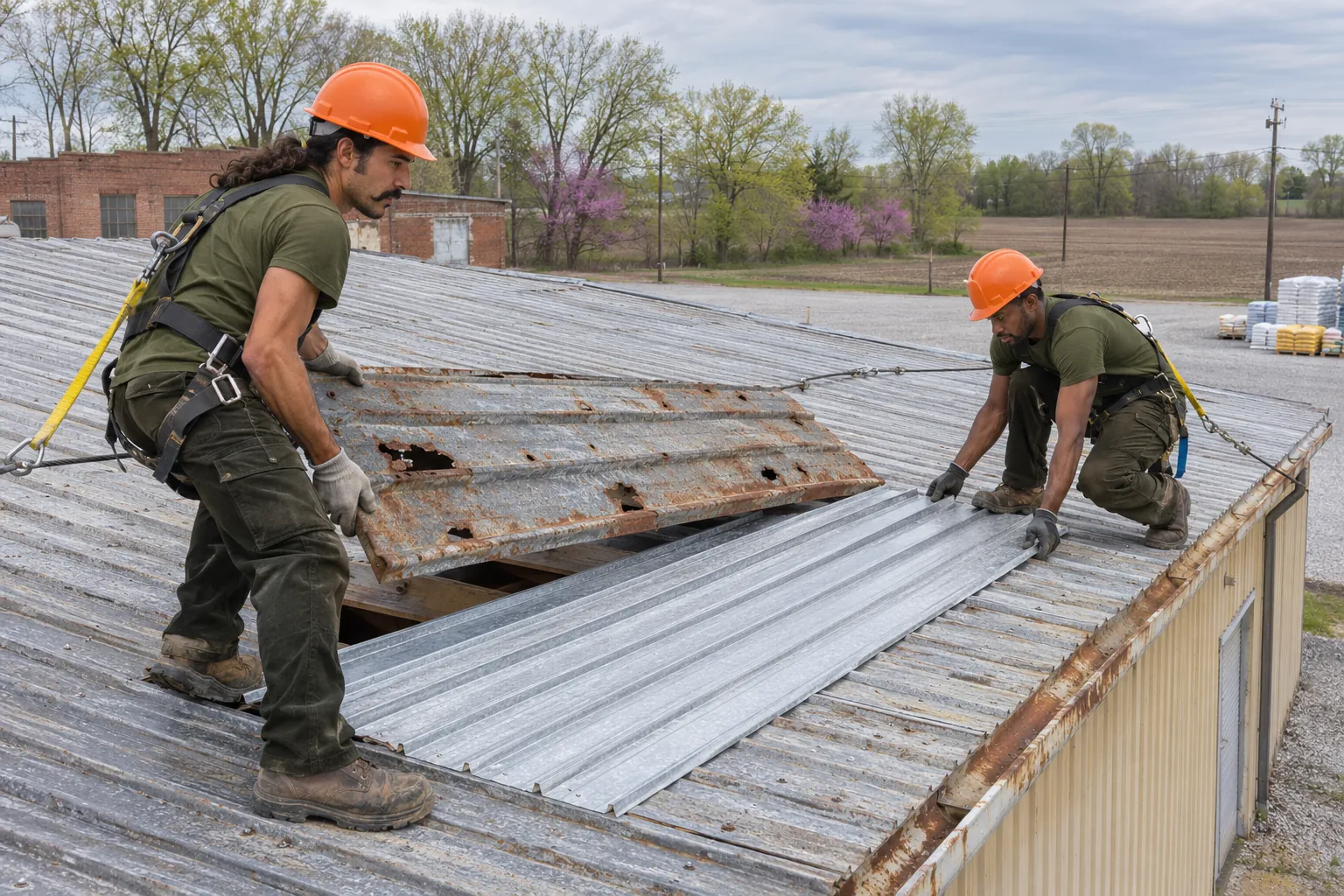
Loose screws, rusted laps, and bent metal flashing.
Common FixesRust through most panels means replacement beats patching.
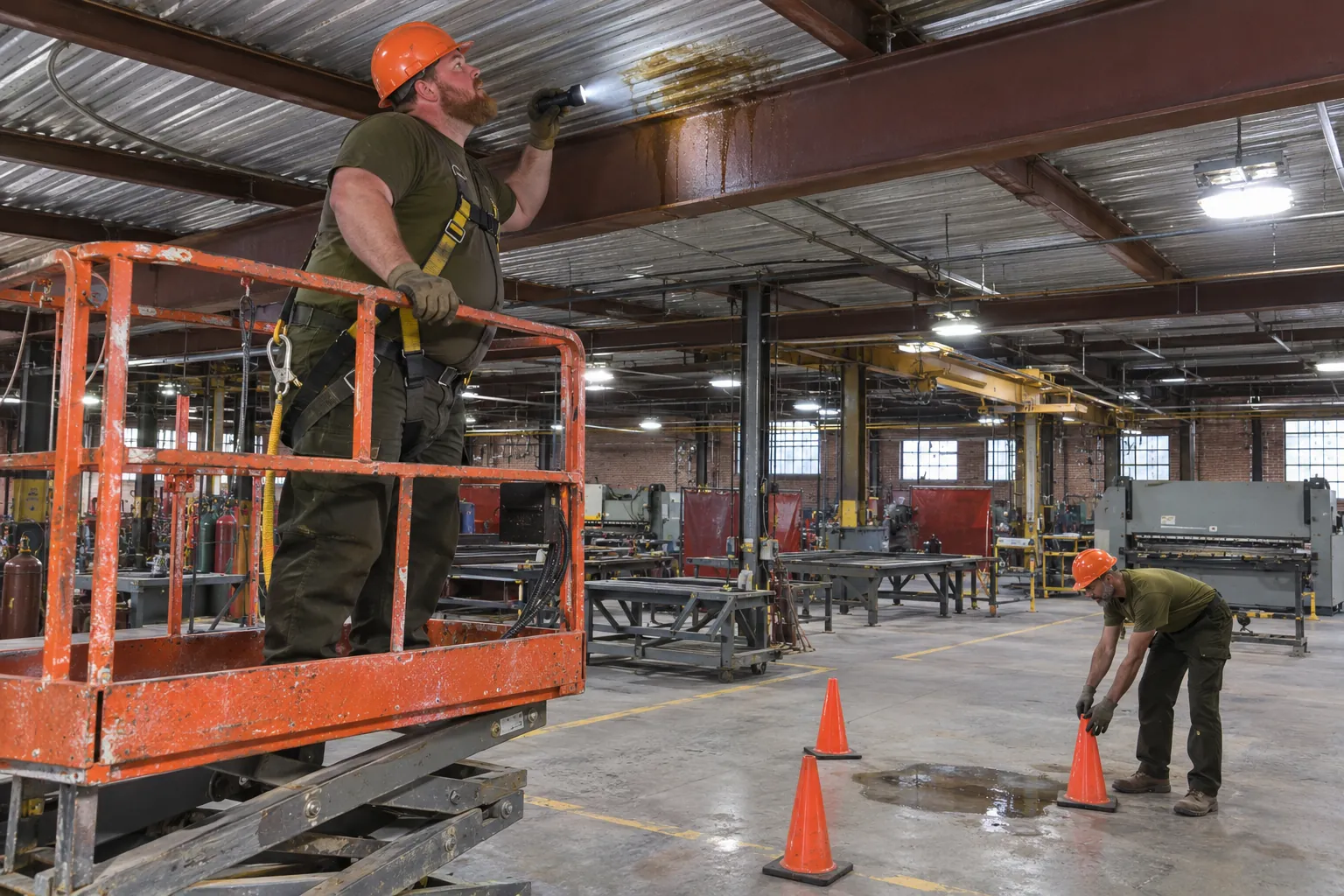
Ceiling stains traced back to the failed roof detail.
Common FixesLeaks in every section and every rain mean replacement.
Fans, curbs, and drains repaired around production.
Common FixesSoaked decks under process areas need a section replaced.
Short answers on winter work, heavy-rain leaks, and blisters.
Yes, once snow and ice are cleared from the work area and it is dried. Cold-rated adhesives and sealants handle many repairs, and the rest get a temporary fix now and a permanent one in milder weather.
Rising water is reaching a weak point a light shower never touches: low curb flashing, an opened lap near a drain, or a blocked scupper. Drains and overflow paths get checked first.
Only when it is cracked, growing, or holding water. Small dry blisters get photographed and watched, since cutting a sound one creates a seam that was not there.
Moisture or air trapped between layers expands in heat and lifts the membrane. Many blisters signal wet insulation, so readings are taken around each one.
When leaks show up across many sections, insulation is soaked over large areas, or patches keep failing. Moisture readings show which case you have.
Sometimes, if the existing roof and insulation are dry and the code allows another layer. Wet areas must come off first.
Drains and scuppers get cleared first, then low spots get built up with tapered insulation or a cricket so water runs to the drain. A sagged deck gets a structural look before anything is added.
Often. Scupper boxes rust and separate from the membrane, and overflow water then runs into the wall. A rebuilt box sealed to the roof keeps the exit open.
Tell us where the water shows and what the membrane looks like. We will walk the roof and send a written repair scope.