Parapet and Coping Repair in Hartford City
Open coping joints and cracked caps let rain into the wall. New sealant, replaced caps, and counterflashing stop it at the top. Base flashing below the coping gets checked in the same visit.
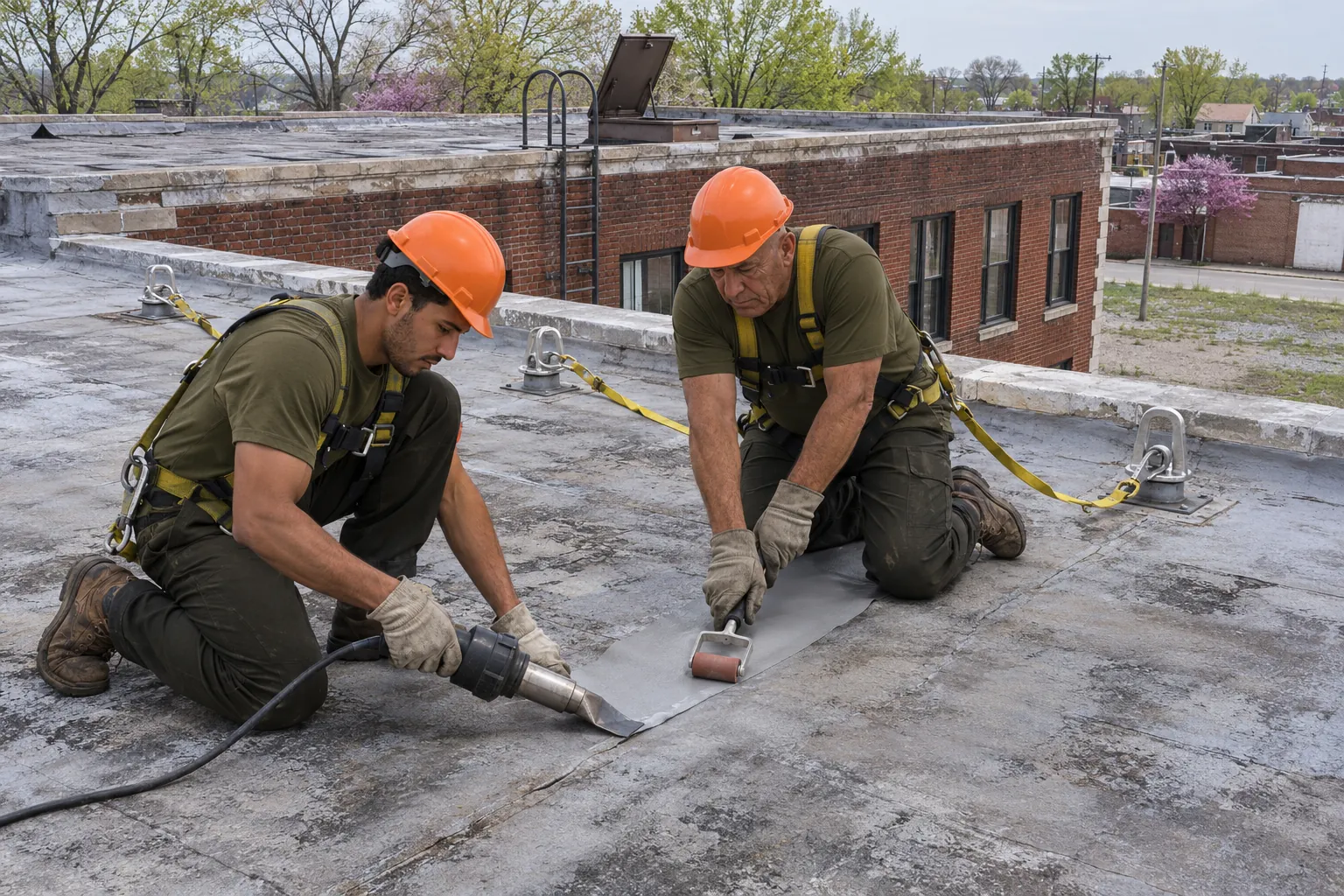
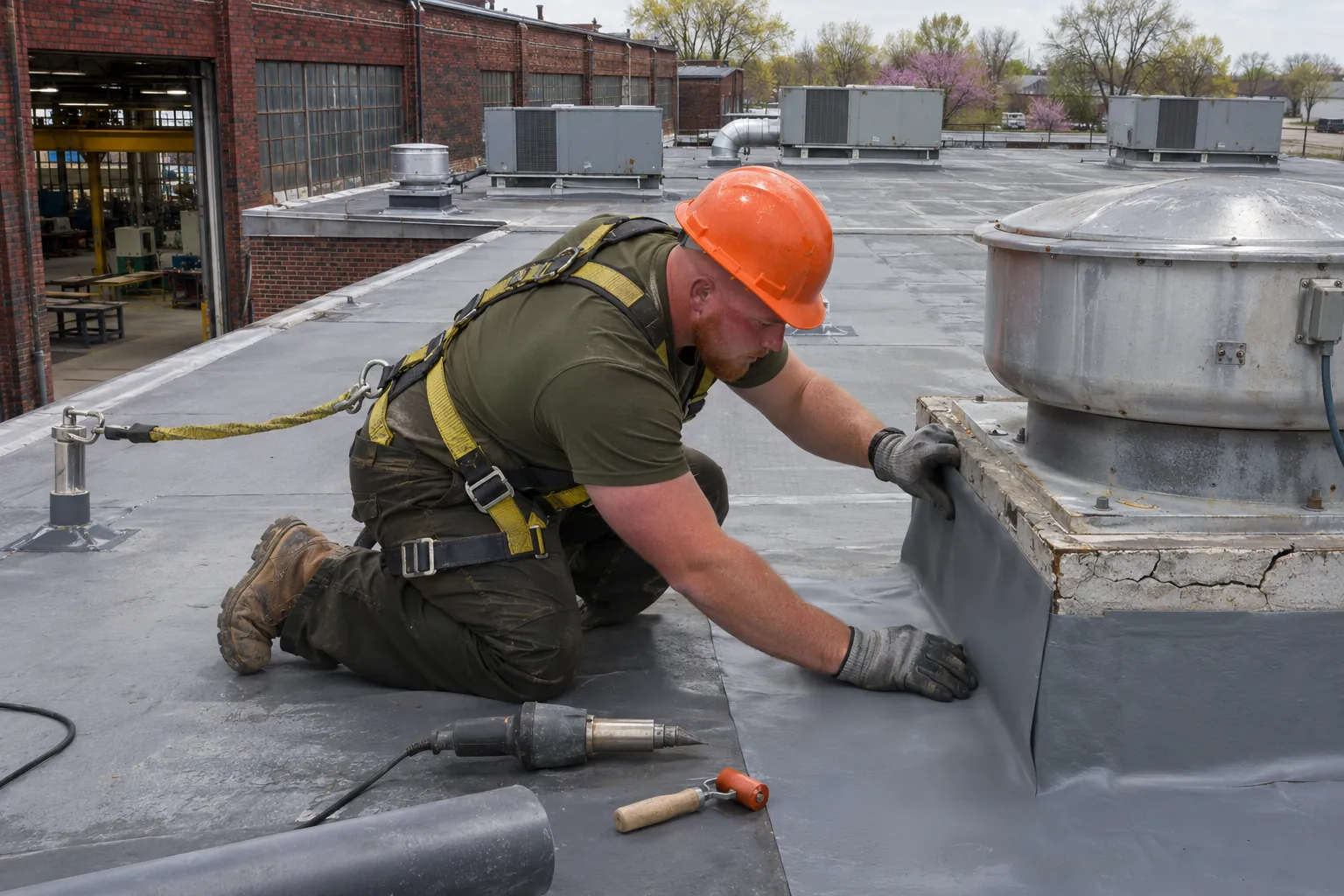
As a Hartford City commercial roof repair contractor, we repair parapets, coping, and wall flashing on older brick buildings and roofs on industrial sites.
Much Hartford City commercial roof repair work happens where the roof meets the wall.
Older brick buildings carry parapets above the roof line, capped with stone or metal coping. When coping joints open or mortar wears, water enters the wall itself, runs down behind the membrane, and shows up inside along the exterior wall.
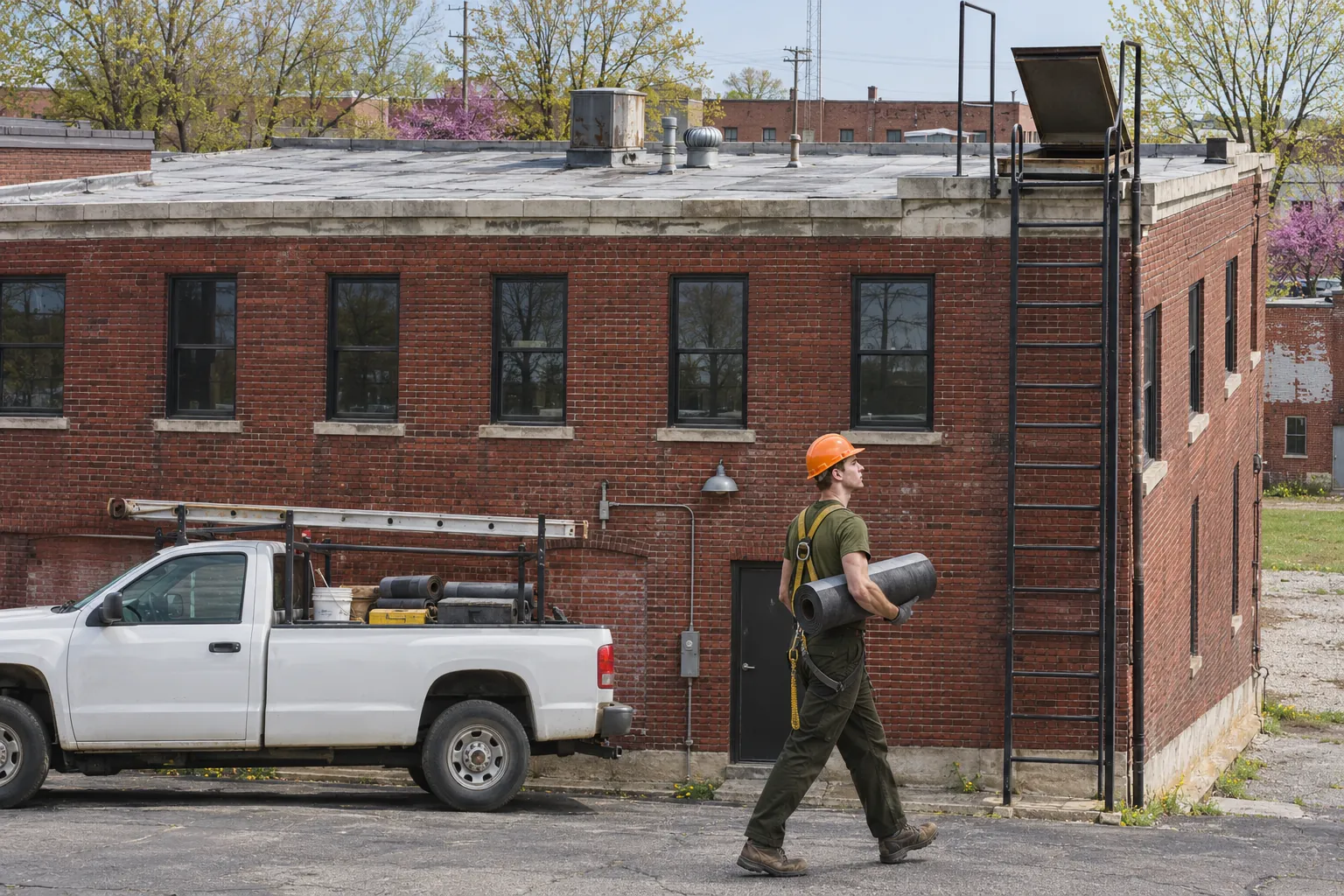
Close-set buildings also mean tight staging. Ladders, material lifts, and debris chutes get planned around sidewalks, alleys, and neighbors before work begins.
Old walls and working plants bring six common repairs.
Open coping joints and cracked caps let rain into the wall. New sealant, replaced caps, and counterflashing stop it at the top. Base flashing below the coping gets checked in the same visit.
Plant roofs need repairs at drains, equipment curbs, opened seams, and metal fasteners, planned around production below. Temporary seals can hold over active areas until a planned shutdown.
Where the membrane turns up the wall, old base flashing shrinks and pulls loose. A new flashing strip seals it to the masonry. Termination bar and sealant along the top edge lock it in place.
Mortar joints in the parapet weather faster than the wall below. Open joints get noted for masonry repair with the roof work. Photos of each open joint go to the owner with the roof scope.
Scuppers through old parapets rust and separate from the membrane. Rebuilt boxes keep water moving out. The membrane gets flashed up into the new box and sealed.
Water inside the wall shows up as stains well below the roof. Tracing starts at the coping above. Moisture readings along the base of the parapet help narrow it down.
Some wall leaks end at the roof flashing. Others need masonry help as well.
| What We Check | Roof Repair Covers It | Add Masonry Work |
|---|---|---|
| Coping | Open joints between sound caps | Cracked or loose caps throughout |
| Mortar | Joints tight above the roof line | Open joints and loose brick |
| Base flashing | Pulled loose in short runs | Failed along the whole wall |
| Inside stains | One stain under one section | Stains along the full wall |
Sealing the wall-to-roof joint protects the masonry and the rooms beside it.
Water running inside a parapet stains plaster, rots wood blocking, and loosens brick over time. Closing the coping and flashing at the top keeps the whole wall dry.
Less water in the wall means less freeze damage to brick and mortar. Sealed coping keeps the top course of brick from soaking each winter.
Planned ladder and lift spots keep alleys and sidewalks open. Debris comes down in one planned trip instead of across the day.
Industrial roof repairs fit around production schedules.
Call and describe where the stain starts. Water inside a wall usually enters at the coping above it.
Wall work adds a staging plan and a top-down check.
Ladder spots, lifts, and debris paths get set around sidewalks, alleys, and neighboring walls before work starts.
Coping joints, caps, counterflashing, and base flashing are checked together, along with mortar above the roof line.
The scope lists the roof and flashing repairs, and notes any masonry joints for the owner to address.
Open coping joints are resealed or caps replaced, counterflashing is reset, and new base flashing goes up the wall.
Photos go to the owner, and the stained wall is checked after the next heavy rain.
Older walls and tight lots add three planning points to a roof repair.
Stone, terra cotta, and metal coping each seal differently at the joints, so the repair follows what is already on the wall.
Buildings that share a wall or sit on a narrow alley need staging planned so neighbors and walkways stay clear.
Scuppers cut through thick parapets rust inside the wall, where a leak at the box shows up as a stain below.
Outside Hartford City, we repair commercial roofs in Anderson and four other towns.
Building elsewhere? Call us or send us a message.
Parapets, coping, and plant roofs in Hartford City.
Open coping joints and worn mortar above the roof let water into the wall, where it runs down and stains the inside face.
Open mortar joints get noted with photos. Repointing is masonry work, while coping, counterflashing, and base flashing are roof repairs.
Yes. Plant work there covers drains, flashing at equipment curbs, opened laps, and loose metal screws, with each visit set around the production schedule.
A clear list of what was fixed and what to watch, with photos of each repair area.
Staging gets planned before the visit: ladder spots, a material lift if needed, and a debris path that keeps sidewalks open.
When staging sits near a shared wall or alley, a heads-up to neighbors helps. We plan the work around it.
The box rusts inside the wall and separates from the membrane, so overflow water runs into the masonry instead of out.
The old box comes out, a new one is fitted through the wall, and the membrane is flashed and sealed to it.
Tell us about the wall, the stain, and the access. We will check the coping and flashing and write up the repair.