Most Common Cause of Metal Roof Leaks
Screws back out as panels expand and shrink, washers crack, and holes widen with each freeze-thaw cycle. A new oversized screw and washer seated into the purlin closes the leak.
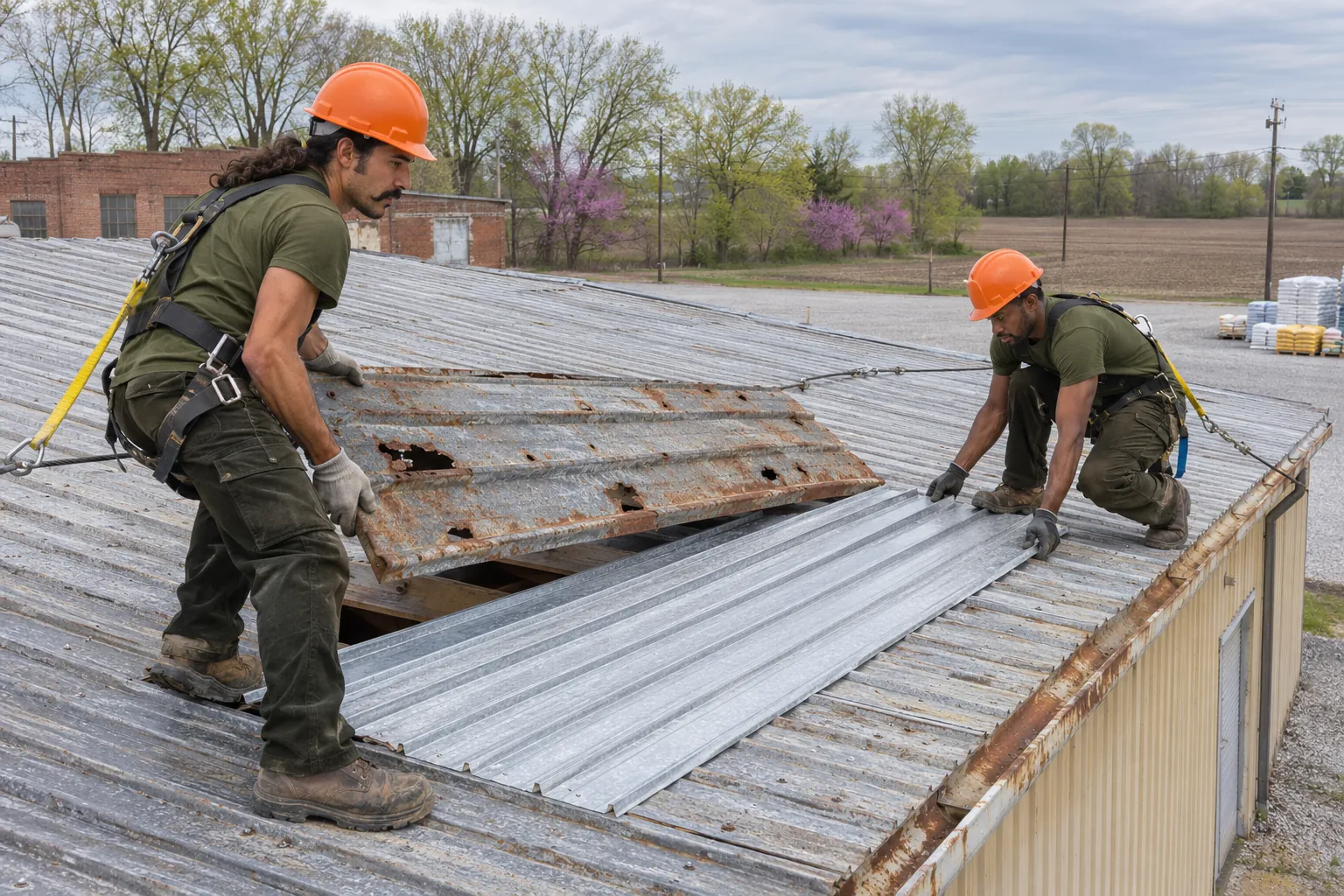
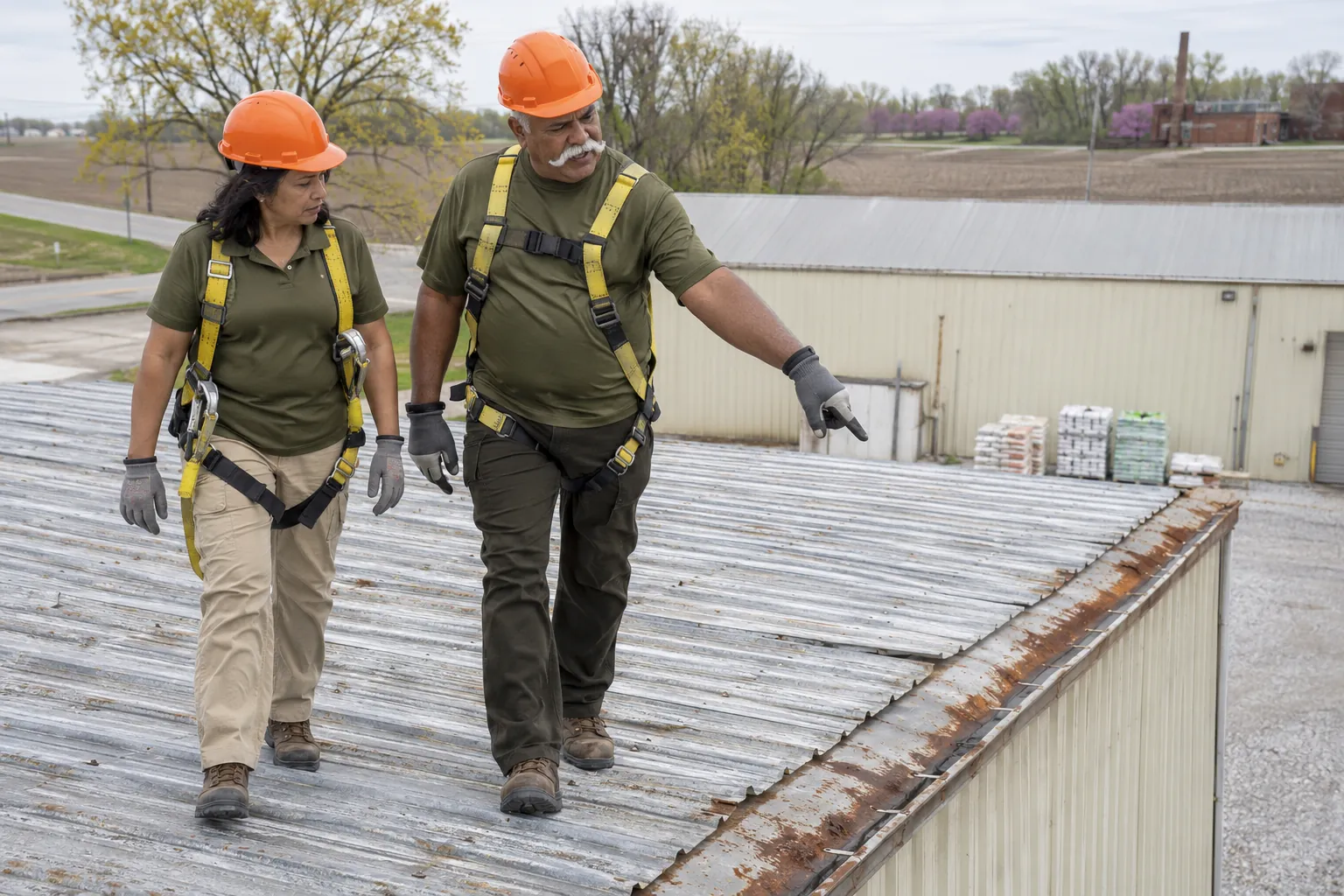
As an Anderson commercial metal roof repair contractor, we replace backed-out screws, rusted panels, and bent flashing on screw-down and standing-seam roofs.
Anderson commercial metal roof repair works when the panels are solid and the leaks trace back to fasteners, laps, or trim.
| What We Check | Good Fit For Repair | Plan For More Work |
|---|---|---|
| Fasteners | Loose or leaking screws in some rows | Stripped holes across the whole roof |
| Rust | Surface rust at laps and panel ends | Rust holes through many panels |
| Flashing | Bent or loose trim at walls and curbs | Flashing failing at every transition |
| Hail | Shallow dents and a few split panels | Punctures spread across the field |
| Purlins | Framing straight and holding screws | Rotted or bent purlins under panels |
Metal roofs leak at the joints more than the panels. These six points cause most of the drips we trace.
Screws back out as panels expand and shrink, washers crack, and holes widen with each freeze-thaw cycle. A new oversized screw and washer seated into the purlin closes the leak.
Ridge caps, rake trim, and wall flashing loosen and rust first. Failed sealant comes off, and bent or rusted pieces get replaced with new metal formed to fit.
Hail splits panels, cracks skylights and vent caps, and loosens screws near impacts. Each hit gets photographed, and the ones letting water in get repaired.
Water held in side laps and at the low end of each panel rusts the steel from the edge in. Cleaned, primed, and sealed laps stop the spread.
Older fiberglass skylight panels turn brittle and crack along the fasteners. Same-profile replacements drop into the run of metal.
Drips on cold mornings can come from moisture forming under the panels. Checking the insulation and the weather before the drip separates the two.
Metal moves with every temperature swing, so repairs focus on the parts that move.
Fresh washers and oversized screws grip enlarged holes and seal under the head. Seating each one into the purlin, instead of the panel alone, keeps it from backing out again through the next winter of freeze and thaw.
Stopping rust at laps and ends keeps it from eating through the steel.
New flashing at walls and curbs sends water back onto the panels.
Shops and pole buildings stop dripping onto equipment and stored stock.
Metal repairs stay mechanical first: new fasteners, sealed laps, and replaced steel.
Stripped holes get a screw one size up with a new EPDM washer, driven snug into the purlin so the washer seals without being crushed flat.
Rusted-through or split panels come out and new panels of the same rib profile and gauge go in, lapped and fastened to match the run around them.
Bent or rusted ridge caps, rake trim, and wall flashing are replaced with new metal bent to fit, then fastened and sealed into the panel ribs.
Call and describe the panels. Rust at fasteners and laps is easier to stop before it eats through the steel.
From the first panel check to the last screw, each metal repair follows these steps.
Screws, washers, laps, and trim get checked row by row, with rust, dents, and splits marked by panel.
Underside checks on insulation and timing of the drips tell a true leak from moisture forming under cold panels.
The scope counts screws to replace, laps to seal, and panels or flashing to swap, so the price matches your roof.
New oversized screws go into the purlins, laps are cleaned and sealed, and rusted panels and trim come off for matching new metal.
Before-and-after photos show each panel and flashing repair, with notes on rows worth checking next year.
Metal buildings often share a site with flat roofs or need a leak traced inside first.
Blisters, open laps, and ponding on membrane roofs.
Common FixesWet insulation across large areas points to a new roof.
Ceiling stains traced back to the failed roof detail.
Common FixesLeaks in every section and every rain mean replacement.
Fans, curbs, and drains repaired around production.
Common FixesSoaked decks under process areas need a section replaced.
Short answers on screw holes, hail, and repair cost.
Pull the old screw, install a new one a size larger with a fresh washer, and seal the head. It has to land in the purlin; a hole that missed the framing gets filled and sealed.
Only where screws are loose, leaking, or rusted. A row-by-row check finds them, and sound fasteners stay in place.
Shallow dents are usually cosmetic. Split panels, cracked skylights, and screws loosened by impact are the repairs that keep water out.
Owners often use dated photos of each hit when they talk to an insurer. We take them on the roof walk after a storm.
The count of screws, laps, and panels needing work, whether flashing must be replaced, how far rust has spread, and how hard the roof is to reach.
A coating is a separate job. Repairs here focus on fasteners, laps, panels, and flashing so the roof sheds water on its own.
Old sealant and loose pieces come off, then the flashing is refastened or replaced and sealed to the panels and walls. Rusted or bent pieces get new metal formed to fit.
At ridges, rake edges, wall transitions, and around curbs and pipes, where panels meet other parts of the building and move against them.
Send a note about the panels, the drips, and the building. We will check every fastener row and write up the repair.