Roof Leak at a Parapet Wall
Cracked coping caps, open mortar joints, and failed counterflashing let water into the wall itself. It often shows up inside some distance from the parapet.
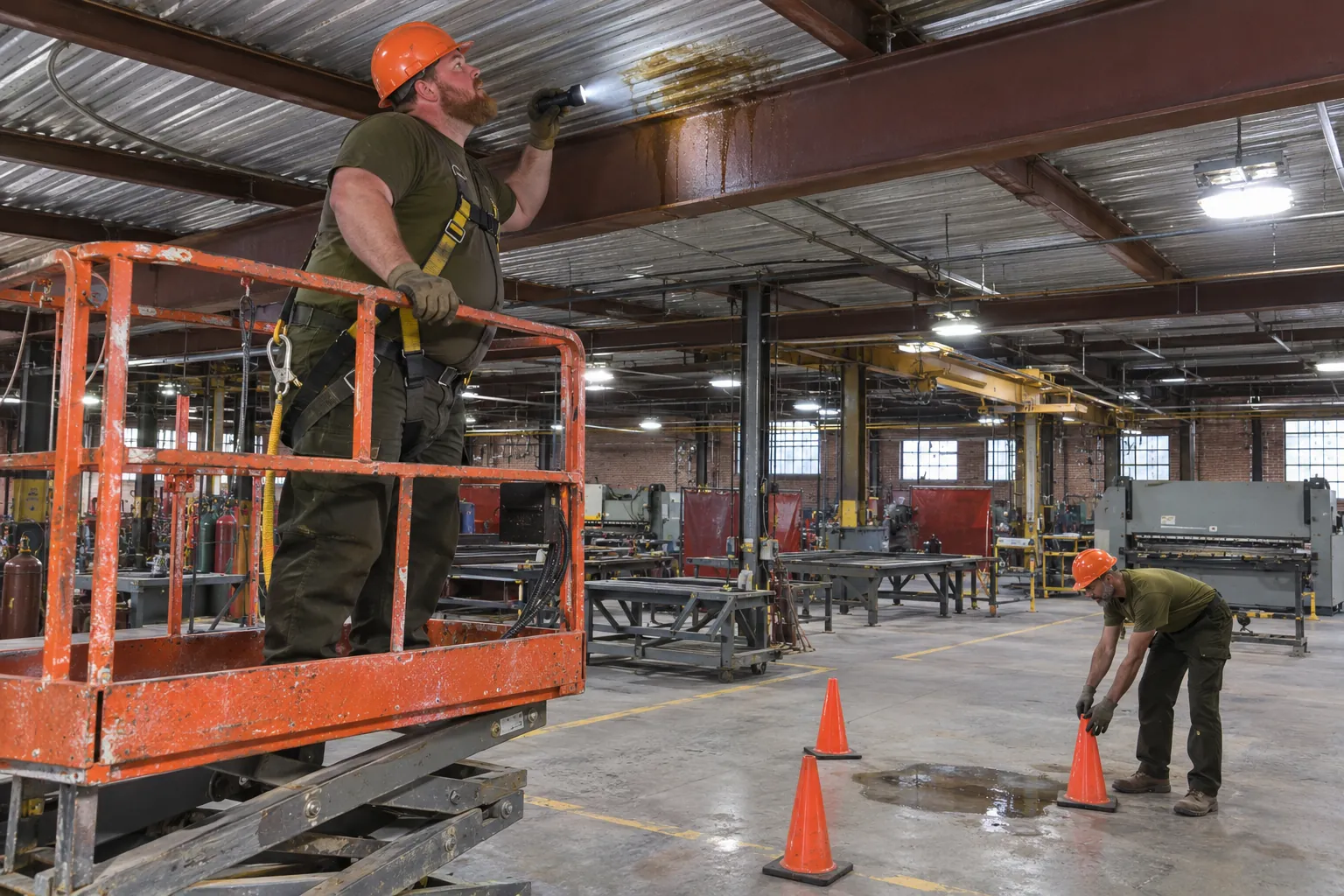
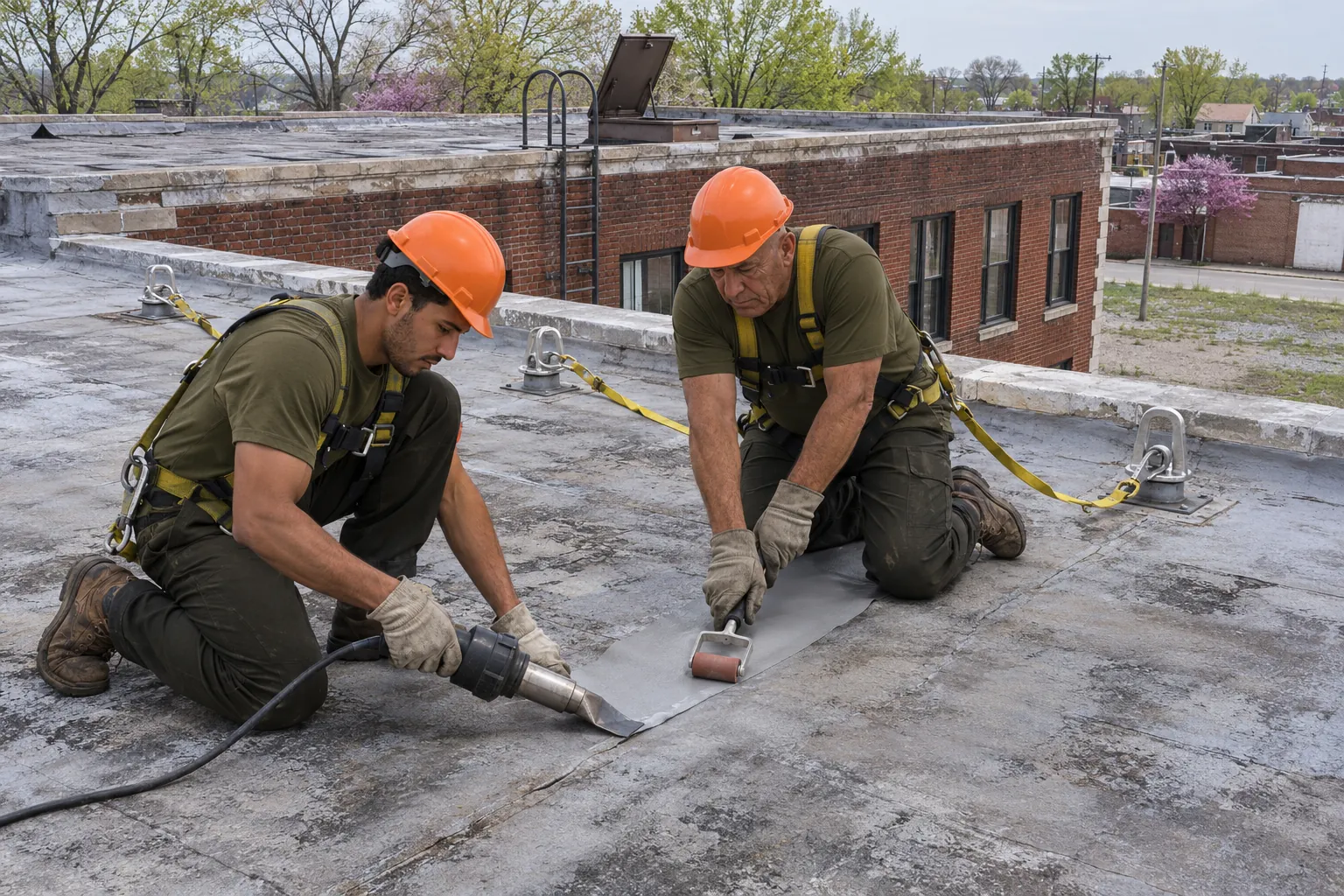
As an Anderson commercial roof leak repair contractor, we follow water from the ceiling stain back to the seam, curb, or wall flashing that let it in.
Anderson commercial roof leak repair holds when the water comes from a few failed details. Widespread leaks point to a bigger job.
| What We Check | Good Fit For Repair | Plan For More Work |
|---|---|---|
| Leak count | One to a few drips you can map | Drips across many bays |
| Source | A seam, curb, drain, or wall flashing | Failure spread across the membrane |
| Insulation | Wet only around the entry point | Wet across large areas |
| Timing | Leaks in heavy rain or thaw only | Leaks in every rain |
| Past repairs | Few patches, still holding | Patches failing and stacking up |
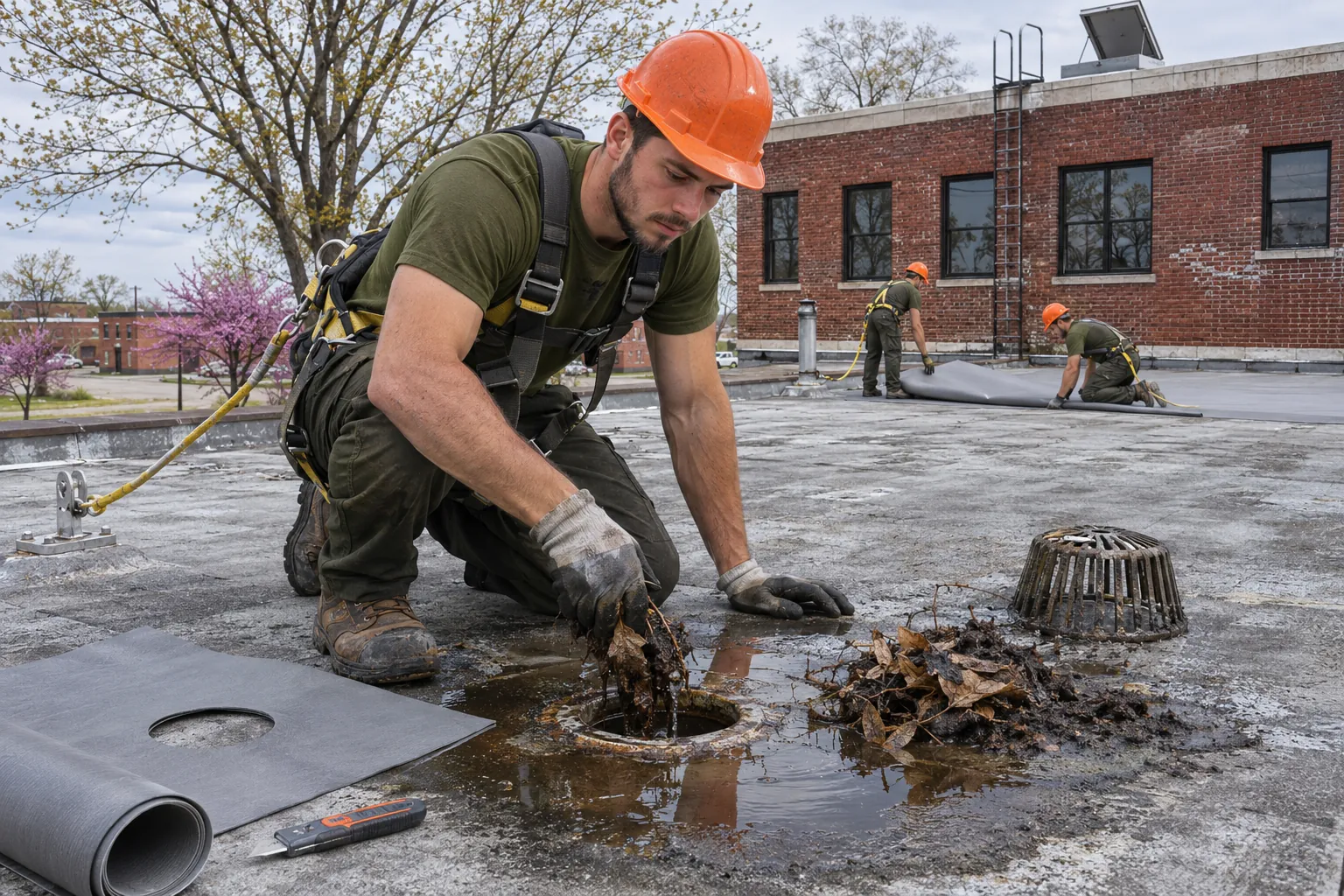
Water travels before it drips. These are the six sources behind most leaks we trace on Anderson buildings.
Cracked coping caps, open mortar joints, and failed counterflashing let water into the wall itself. It often shows up inside some distance from the parapet.
Snow melts over warm areas and refreezes at colder eaves and drains. Meltwater backs up behind the ice and runs under laps and flashing.
A healthy roof stays dry in a downpour. Heavy-rain leaks point to blocked drains, low flashing, or a seam failing where water collects.
High ceilings and racking let water run along purlins before it drops. Tracing starts at the drip inside and works uphill on the roof.
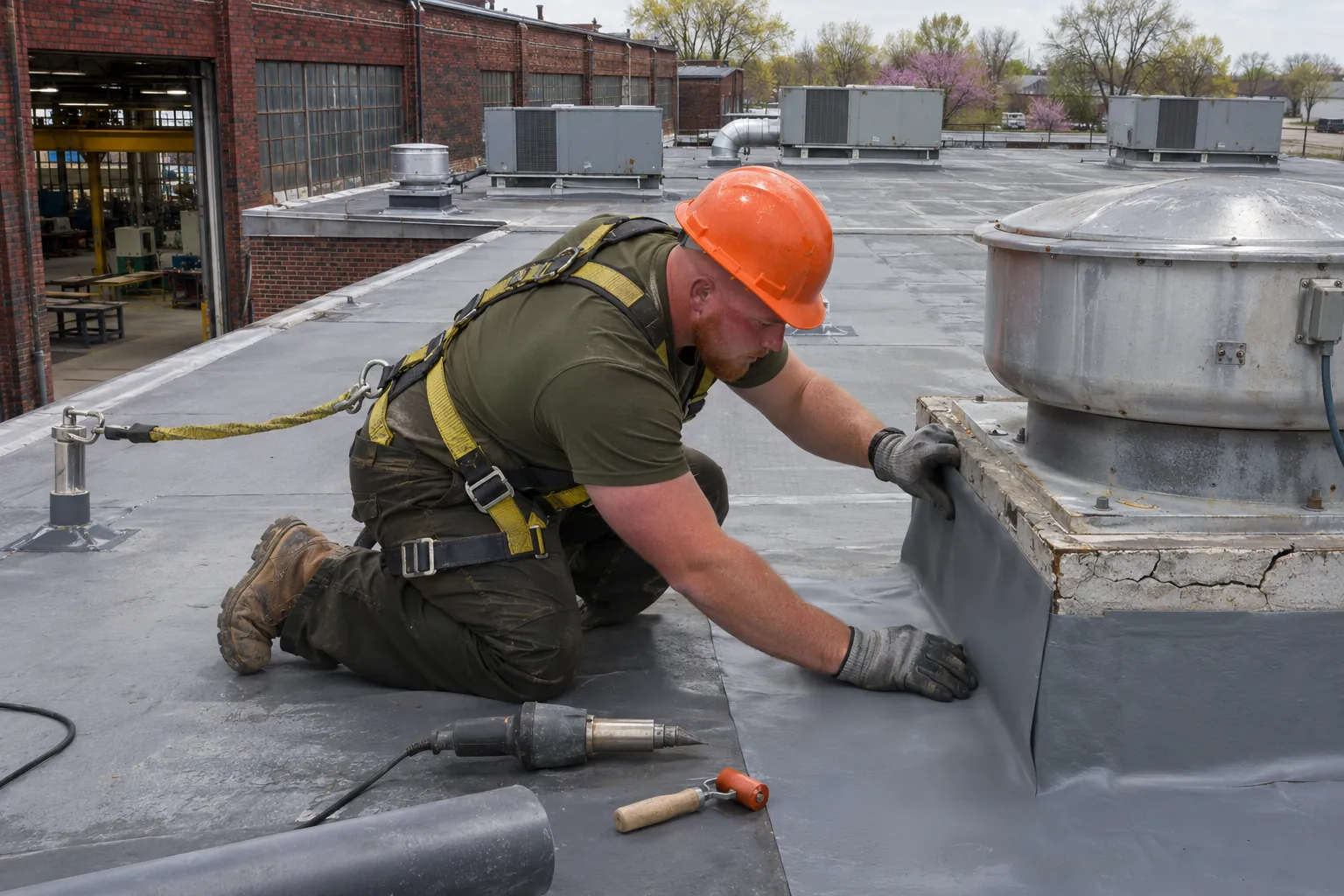
Split boots and dried sealant around HVAC curbs and plumbing vents let water straight into the deck.
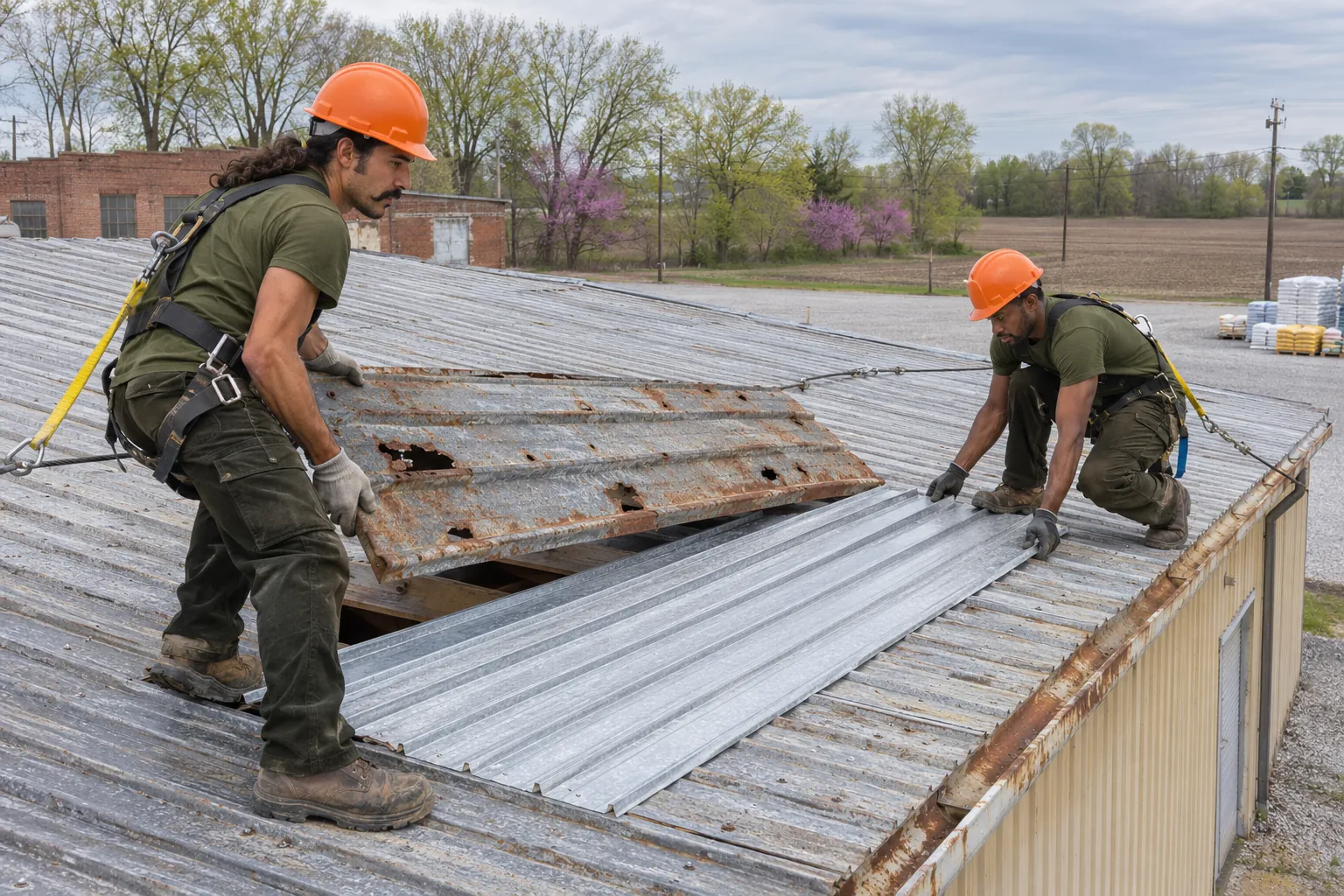
Small openings at seams and screws freeze, widen, and leak by spring. Fall sealing keeps them small.
Stopping a leak at its source protects the walls, deck, and finishes around it.
Patching where the water drips rarely works, because the opening is often far upslope. Tracing it to the failed coping, boot, or lap means one repair instead of a string of patches that miss.
Water stops running inside parapet walls and staining finished space.
Buckets come off the floor and work areas stay open.
Entry points close before water spreads through the boards.
Different leaks call for different ways of finding them. These three cover most jobs.
Readings taken in a grid around the drip show where wet insulation starts and how far it runs, pointing to the high side where water enters.
A small core through the roof layers shows whether the boards are wet and how deep. Each core gets patched before we leave the roof.
When the source still hides, water is run over one detail at a time, such as a curb or a coping joint, while someone watches inside.
Call and tell us where it shows. A new drip far from the last one often means water is traveling, and the source is still open.
Leak work runs inside out: find the water, follow it, fix the opening, and check it.
Every stain, drip, and wet tile gets marked, along with when it shows up: heavy rain, snowmelt, or wind-driven storms.
From the spot over the drip, the walk follows slope uphill, checking seams, curbs, drains, and wall flashing along the way.
The scope names the entry point, the water path, and the repair, with photos of the failed detail.
Failed coping, boots, laps, or flashing come off and new material matched to the roof goes on, with wet insulation replaced.
After the next heavy rain, the owner or manager checks the old drip spots, and we revisit any that show water.
Once the source is found, the fix often falls under one of these services.
Blisters, open laps, and ponding on membrane roofs.
Common FixesWet insulation across large areas points to a new roof.
Loose screws, rusted laps, and bent metal flashing.
Common FixesRust through most panels means replacement beats patching.
Fans, curbs, and drains repaired around production.
Common FixesSoaked decks under process areas need a section replaced.
Short answers on parapets, ice dams, and tracing.
It enters through coping or mortar joints, runs down inside the wall, and exits wherever it finds a path. Coping, counterflashing, and base flashing all get checked.
Entry points under the ice get resealed, drains and gutters get cleared, and we look at insulation and ventilation that cause uneven melting.
Usually. Stains, moisture readings, and a roof walk uphill from the drip find most sources. A small core cut confirms wet insulation.
Wind pushes water sideways under edge metal, coping, and wall flashing. Those details get the closest look.
No. Freeze-thaw widens openings every week, and wet insulation spreads. A temporary repair now can hold until a permanent one.
Before the first hard freeze. Sealing seams, flashing, and screws then limits the water that gets in over winter.
Yes. The same weak point that lets in water during a downpour widens over time, and lighter rain starts reaching it too.
Blocked drains and scuppers, low curb and wall flashing, and seams or screws sitting where water collects. Those get checked first.
Tell us where the water shows and when. We will trace it to the source and write up the repair.