Commercial Roof Drain Repair in Elwood
Membrane pulled back from the drain flange lets water run straight down the drain pipe opening into the deck. A reset clamping ring and a fresh seal close it.
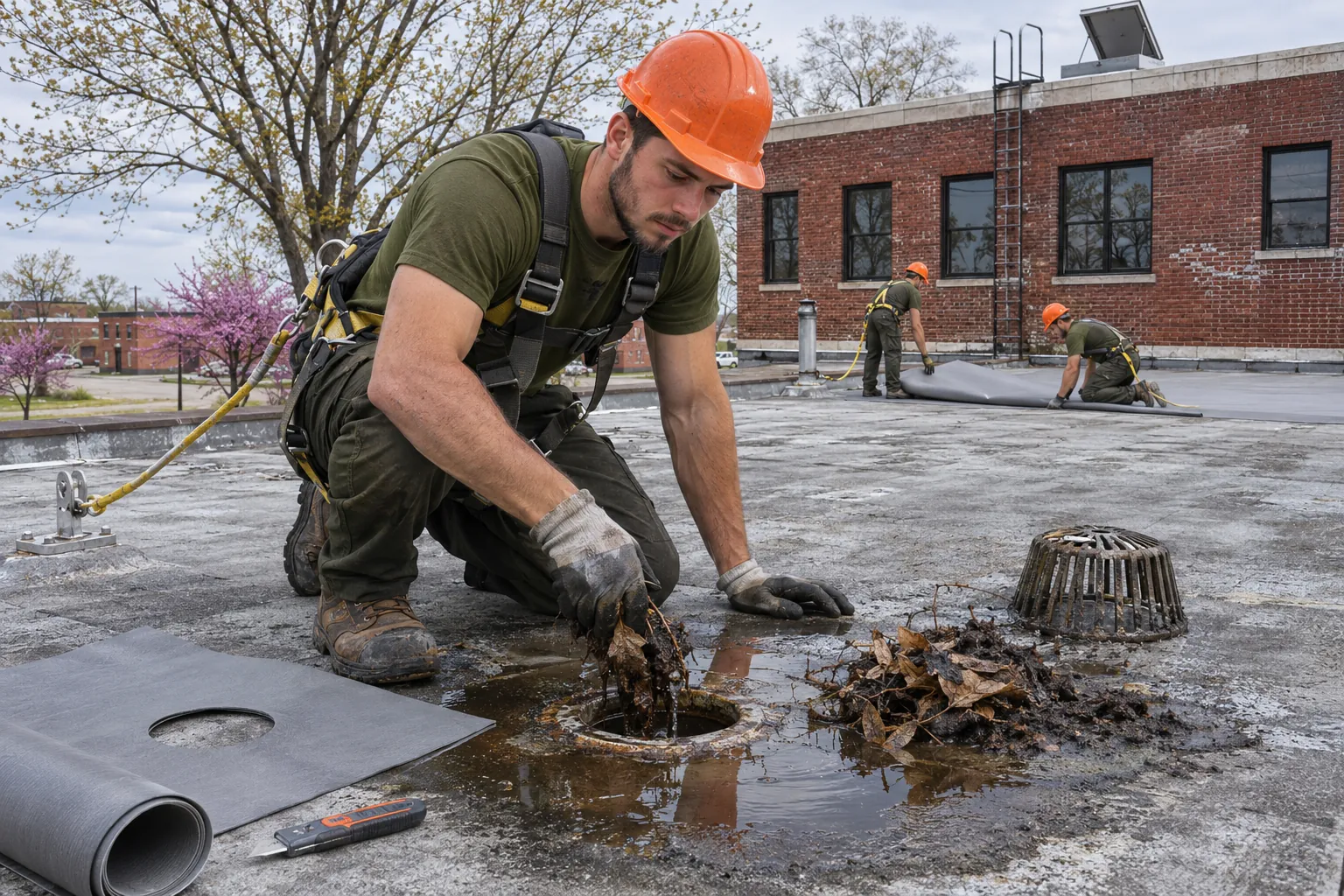
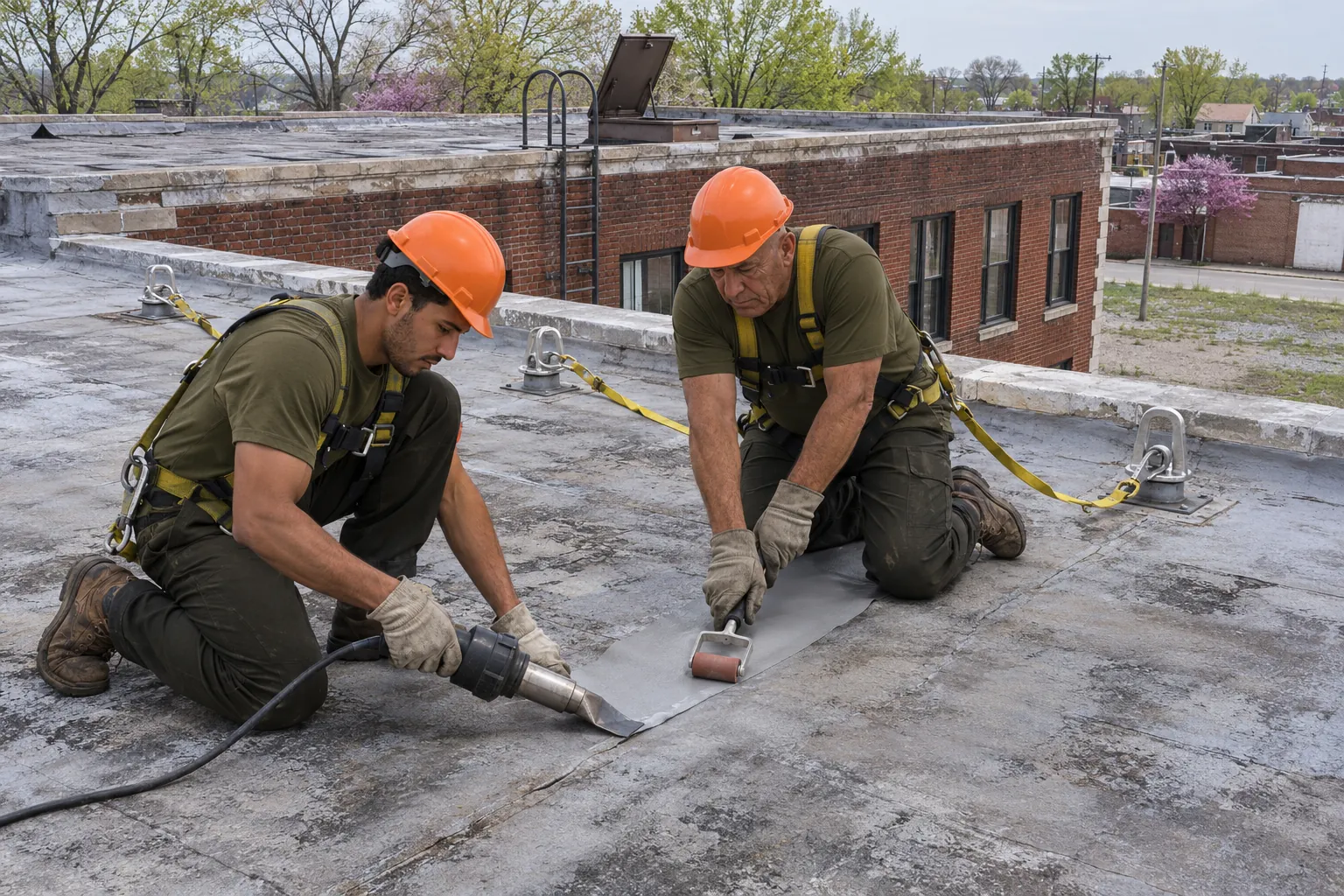
As an Elwood commercial roof repair contractor, we start with the drains, then repair the seams and flashing that ponding water has been working on.
Most Elwood commercial roof repair calls on wide flat roofs trace back to water that is not leaving fast enough.
A broad flat roof on a plant or shop sheds rain through a handful of interior drains and edge scuppers. When one strainer fills with leaves or grit, water spreads across the membrane, finds the nearest weak lap, and soaks into the insulation.
So the first hour on an Elwood roof goes to drains: pulling strainers, checking clamping rings, and looking at how far the ponding ring reaches. Seams and flashing inside that ring get the closest look.
These six conditions show up most on Elwood roofs that hold water.
Membrane pulled back from the drain flange lets water run straight down the drain pipe opening into the deck. A reset clamping ring and a fresh seal close it.
Water sitting two days after rain wears membrane and adds weight. Tapered insulation or a cricket at the low spot pushes it toward the drain.
Edge scuppers clog with leaves and nests, and overflow water backs up against the parapet. Clearing them and resealing the scupper box restores the exit.
Seams that sit underwater for days open first. Cleaned, primed, and rewelded laps hold up where the water gathers.
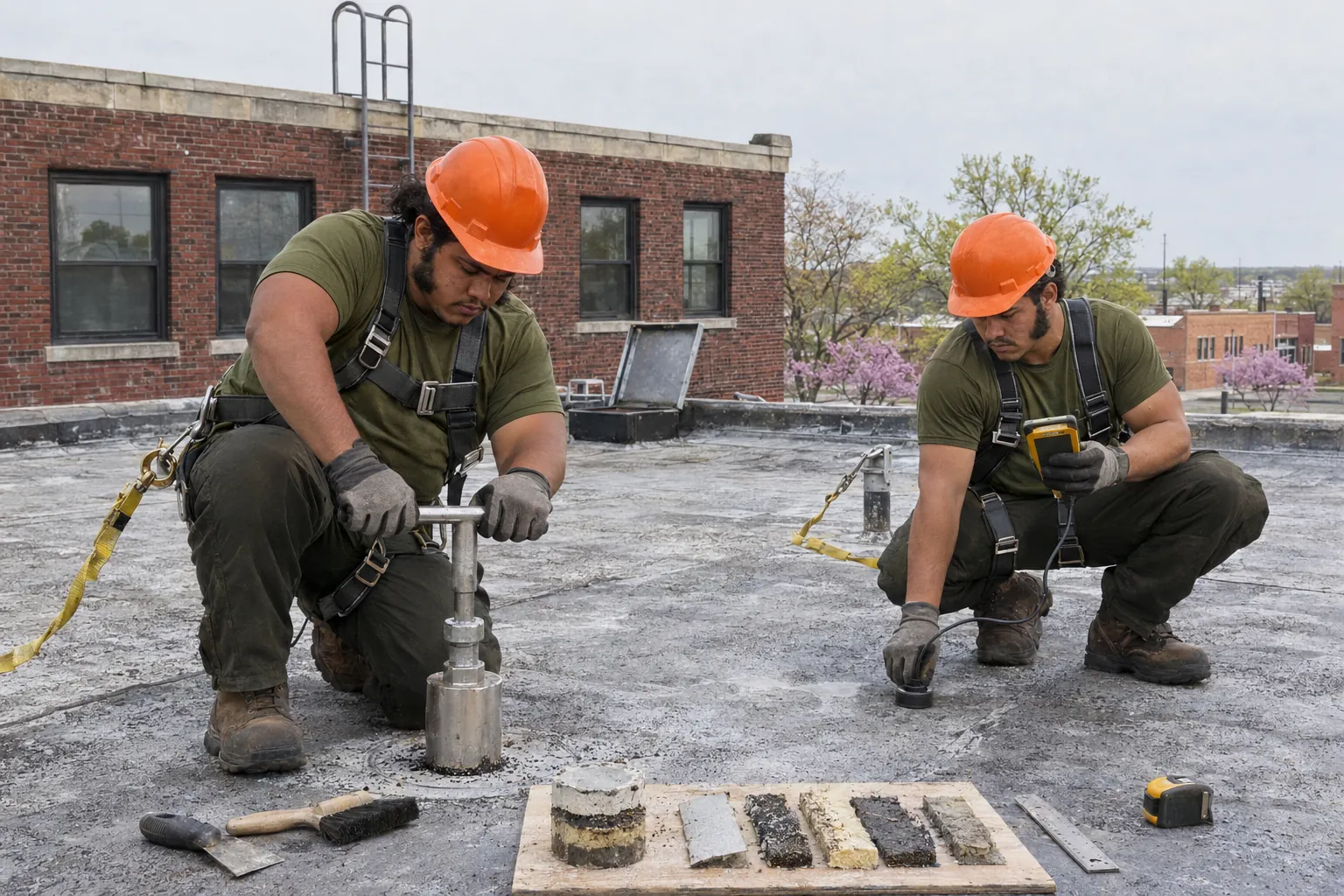
Spongy areas near drains usually mean wet insulation. Readings map the wet boards, and those sections get cut out and replaced.
Meltwater refreezes at cold drains in late winter, and the next thaw backs water under the laps. Clear strainers before winter limit the backup.
Some Elwood roofs only need clear drains. Others have held water long enough to need more.
| What We Check | Drain Repair Covers It | Plan For More Work |
|---|---|---|
| Ponding | Water clears within a day once drains run | Water still sits with drains open |
| Drain seal | Clamping ring loose, membrane intact | Membrane torn at the flange |
| Insulation | Dry outside the ponding ring | Wet boards across the low area |
| Laps | A few lifted edges near the drain | Long seam runs opened underwater |
Moving water off the roof protects every repair made on it.
Once drains run clear and low spots are built up, rain stops sitting on the membrane. Every seam and patch on the roof lasts longer when it is not underwater for days after each storm.
Fewer days of standing water mean fewer chances for it to reach the boards.
Removing ponds takes extra load off the deck and its framing.
Marked drains and a roof sketch make next season's check quick.
Call and describe where it collects. A clogged drain is a small fix today and a wet roof section by spring.
Drains come first, then everything the water has touched.
Strainers come off, debris comes out, and each clamping ring and flange seal gets checked before anything else.
Ponding rings are measured and drawn on a roof sketch, showing where water gathers and how far it spreads.
Drain repairs, tapered build-ups, and the laps inside each ponding ring go on one written scope with the matched materials.
Drains get resealed, wet insulation is replaced, low spots are built up, and laps near the water get welded or taped.
After the next storm, a quick look confirms water now runs to the drains instead of sitting.
Three details shape how a drain repair goes on a wide flat roof.
Roofs with few interior drains depend on every one. A single blocked strainer can send water across a large bay toward the next drain.
Scuppers and overflow drains act as backups. When they sit too high or stay clogged, water rises over curb and wall flashing first.
Snow piled near drains melts by day and refreezes at night, backing water under laps until the strainer thaws open.
From Elwood, we also repair commercial roofs in Anderson and four more towns.
Not on this list? Call us or send us a message.
Drains, ponding, and repairs on Elwood flat roofs.
Each spring and fall, and after big storms. Leaves, grit, and nests fill strainers fast, and one blocked drain can pond water across a wide section of roof.
The membrane seal at the drain flange has failed, or the clamping ring has loosened. Both get reset and resealed so water goes down the pipe instead of beside it.
Water still there two days after rain is worth fixing. It wears membrane, adds weight, and finds any opened lap nearby.
Small low areas can be built up with tapered insulation over the existing deck. Large sags or damaged framing need a structural look first.
Flat membrane, metal, and industrial roofs on commercial buildings. Each job starts at the source, then the repair matches the existing roof system.
Yes. Seams, flashing, and curbs close to failing get noted with photos so the owner can plan for them.
Yes, once snow and ice are cleared around the drain. Cold-rated sealants handle many repairs, and the rest get a temporary seal until it warms.
Meltwater refreezes at cold drains overnight. The next thaw sends water under laps until the strainer opens.
Tell us where water collects and where it shows inside. We will clear the drains, find the source, and write up the repair.