Tracing a Leak Past High Racking
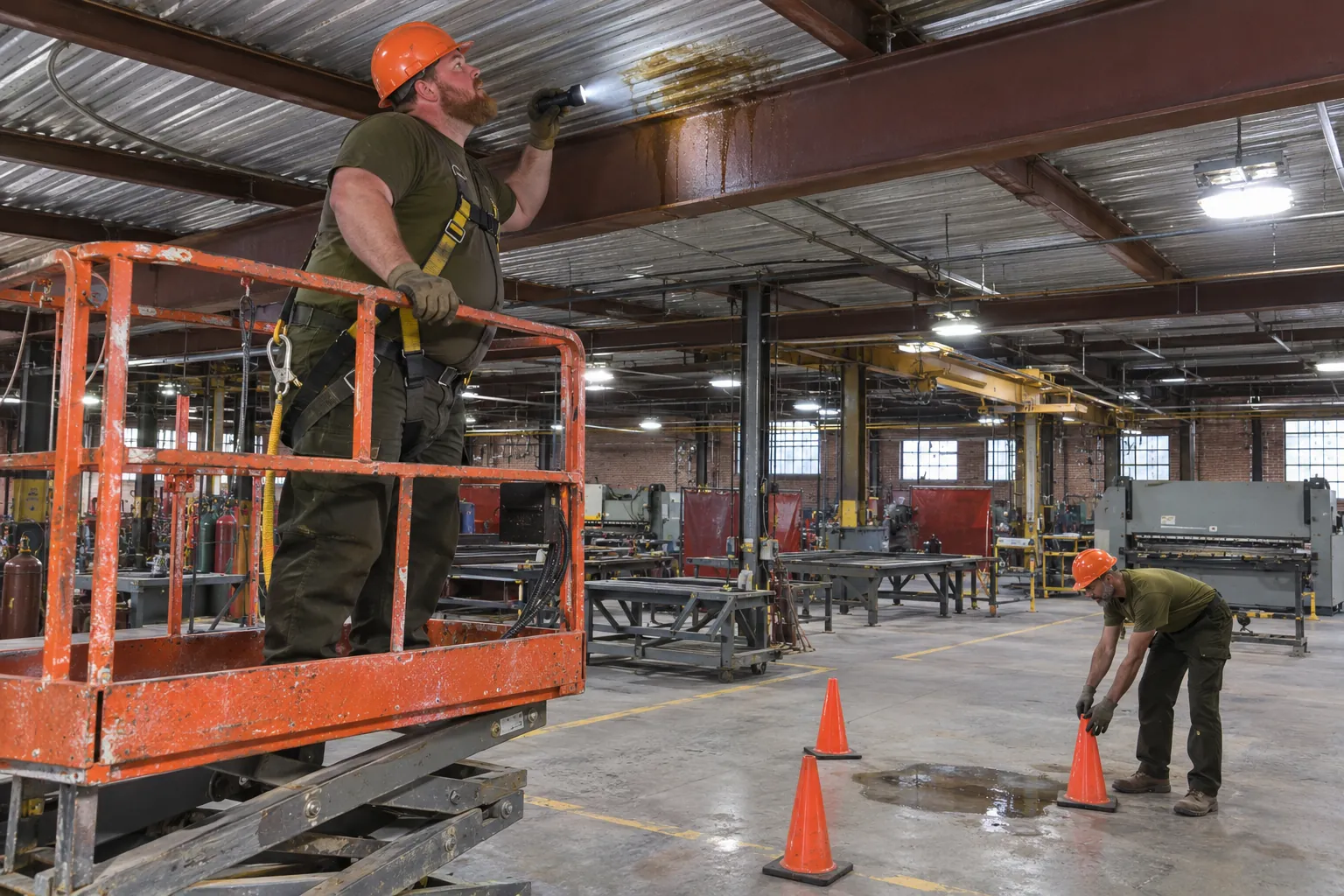
Water rides purlins and deck flutes before it drops. Stains on the deck underside show the path back toward the real opening. A lift between racking rows lets us follow those stains to the high side.
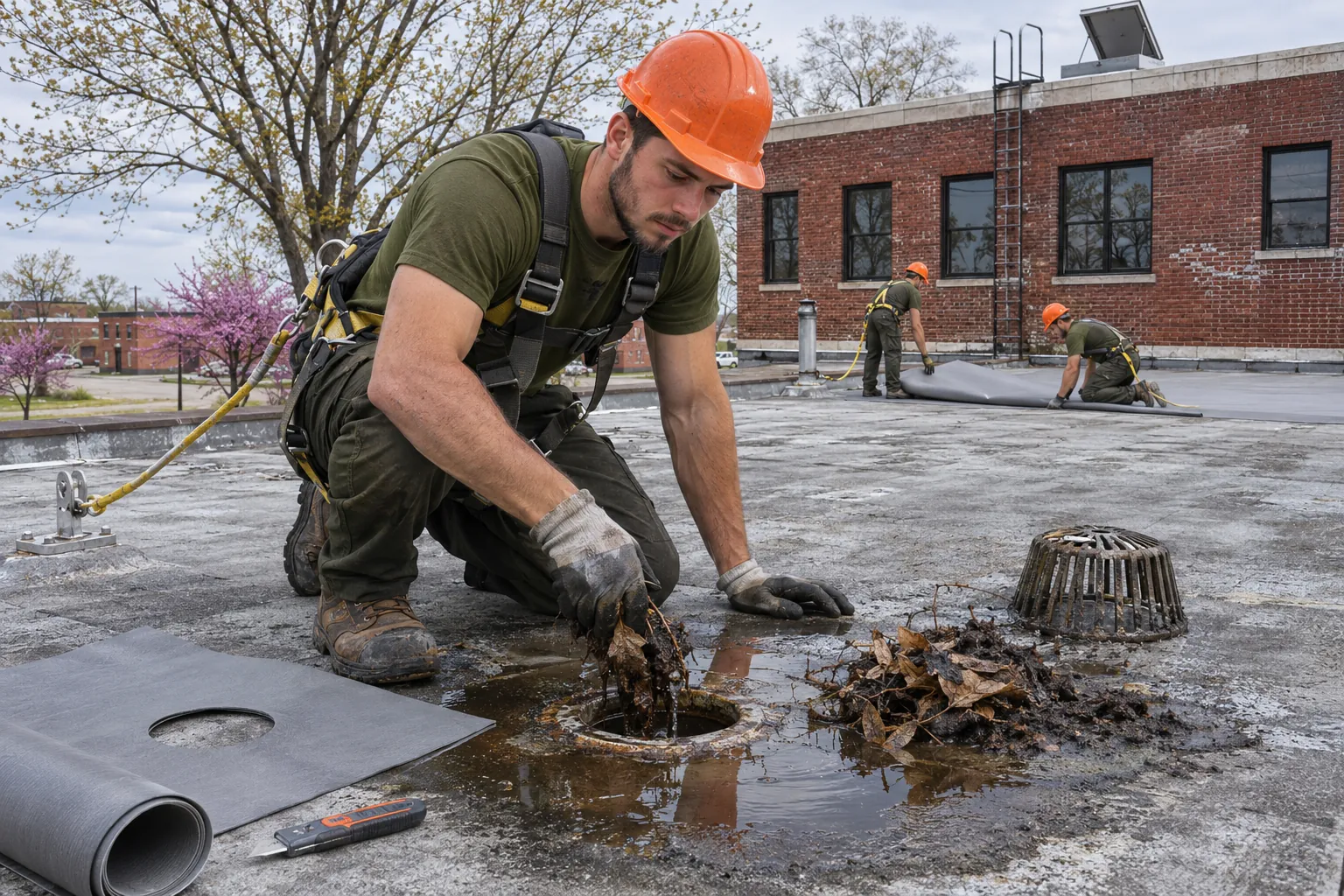
As a Pendleton commercial roof repair contractor, we trace warehouse leaks from the wet pallet back to the roof and repair them without stopping work inside.
Pendleton commercial roof repair on warehouses begins at floor level, because the drip is rarely under the opening.
Tall warehouse ceilings give water room to travel. It enters at a lap, screw, or curb, runs along a purlin or deck flute, and drops onto racking or the floor some distance away. Patching the roof straight above the puddle misses it.
So tracing starts inside with a lift or ladder, following stains on the deck underside. Then the roof walk works uphill from that line to the failed detail.
Warehouses leak at the same few details. These six bring most Pendleton calls.
Water rides purlins and deck flutes before it drops. Stains on the deck underside show the path back toward the real opening. A lift between racking rows lets us follow those stains to the high side.
Wet pallets and stained stock usually trace to one failed lap or curb. Finding it from inside first keeps the roof repair on target. Marking each wet spot on a floor plan shows the pattern.
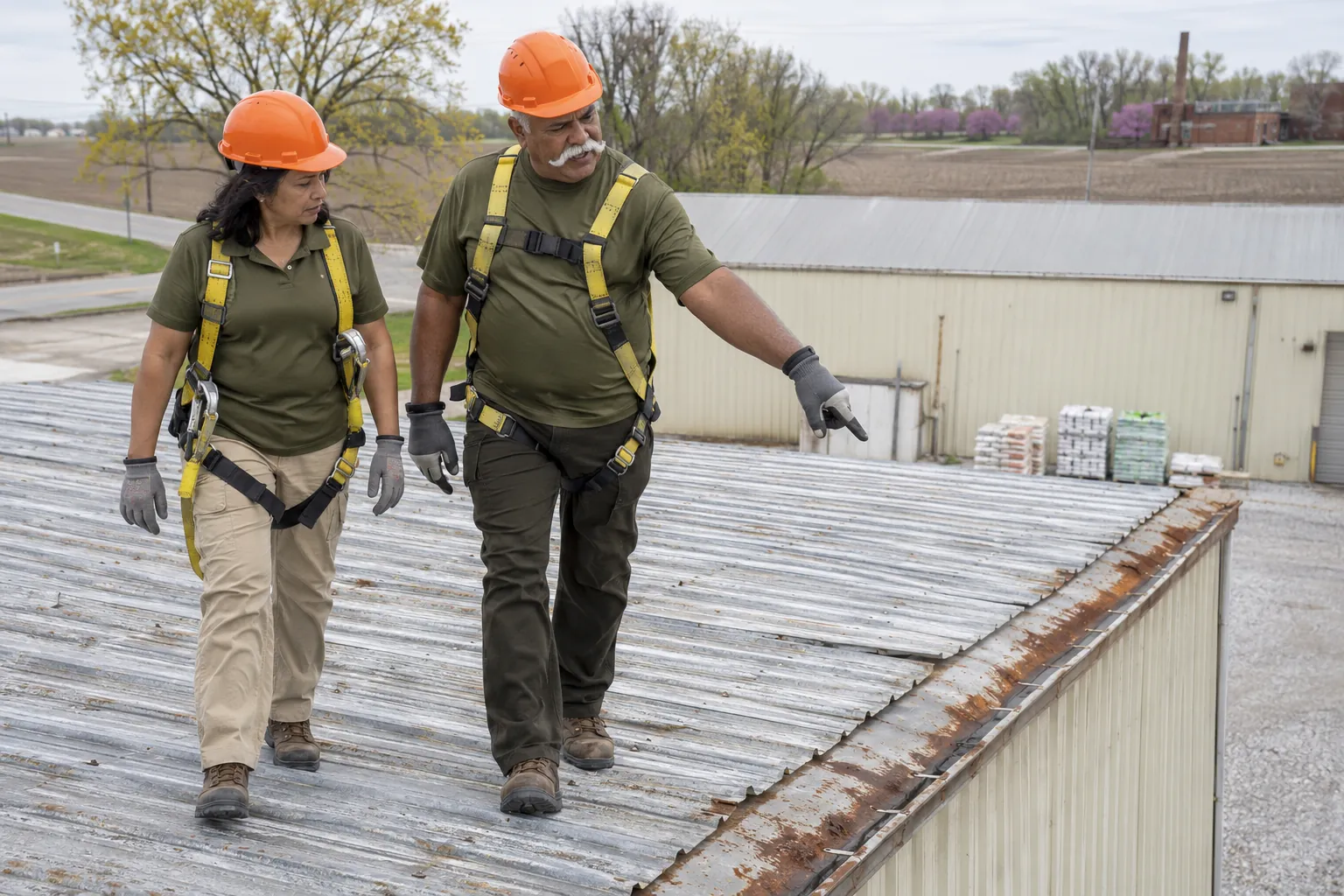
On metal warehouse roofs, backed-out screws and cracked washers let water in along each fastener row. New oversized screws seated into the purlins close each one.
Brittle skylight panels split at the fasteners and drip onto aisles. Same-profile replacements close the run. The seal where skylight meets metal gets redone too.
Long runs of membrane move with heat and cold, and lap edges lift first on wide warehouse roofs. Cleaned laps get rewelded or taped along the lifted stretch.
Storms lift edge metal on big flat roofs, and rain drives under it toward the dock wall. Refastened edge metal and a new termination bar hold it down again.
One traced leak usually means one repair. A pattern of leaks across bays points to more.
| What We Check | Spot Repair Fits | Plan For More Work |
|---|---|---|
| Drip pattern | One or two drips you can map | Drips across many bays |
| Source | A single lap, curb, or skylight | Laps lifting along every sheet |
| Deck | Dry underside beyond the drip | Rust or stains across the deck |
| Stock exposure | Covered by tarps for one visit | Moved every time it rains |
For a warehouse, a roof leak is an inventory problem.
Stopping a drip at its source keeps water off pallets, cartons, and floor lanes. Early repairs mean fewer tarps over racking and fewer damaged loads leaving the dock.
Repairs from the roof leave trailers and forklifts free to work.
Puddles under drips stop forming in forklift lanes.
Entry points close before water spreads along the deck.
Call with where the water lands. Tracing it now beats moving stock every time it rains.
Warehouse repairs add an inside step and a dock plan.
Wet spots on the floor and racking are marked, then deck stains overhead are followed toward the high side.
Ladder spots and material drops get set away from dock doors and truck lanes with the warehouse manager.
The roof walk starts over the drip line and climbs, checking laps, screws, skylights, and curbs on the way.
Failed laps, screws, or skylight panels get replaced with matching material, and debris stays contained on the roof.
Photos of the source and the repair go to the manager, with the drip spots to recheck after the next storm.
A warehouse adds three things to think about beyond the roof itself.
Trailer arrivals set when ladders and material drops can go near the dock wall, so the plan starts with the shipping calendar.
Tall racking hides the deck and shifts where drips land. Lift access between rows decides how tracing inside works.
Long rows of skylight panels are a common entry point on warehouse metal roofs and get checked panel by panel.
Besides Pendleton, we repair commercial roofs in Anderson and four more towns.
Warehouse somewhere else? Call us or send us a message.
Warehouse leaks, inside access, and dock traffic.
Yes. Most repairs happen from the roof. If inside access is needed to trace water or cover stock, the times get set with the warehouse manager.
Water runs along purlins and deck flutes before it drops. On tall warehouses it can travel well away from the opening.
Sometimes, to follow stains on the deck underside. A lift or ladder gets placed where it stays out of forklift lanes.
Ladders and material drops go on the side away from trailers, and debris stays on the roof until it comes down in one trip.
Lap edges on long membrane runs, panel screws on metal roofs, and skylight panels. A yearly walk catches them early.
Rarely. Covering stock under the work area is usually enough, since the repair itself happens up top.
Often. Older panels turn brittle and crack at the fasteners, and the seal between skylight and metal panel dries out.
Yes. A same-profile panel drops into the run, fastened and sealed like the metal around it.
Tell us where water lands in the warehouse. We will trace it to the roof and repair the source.